

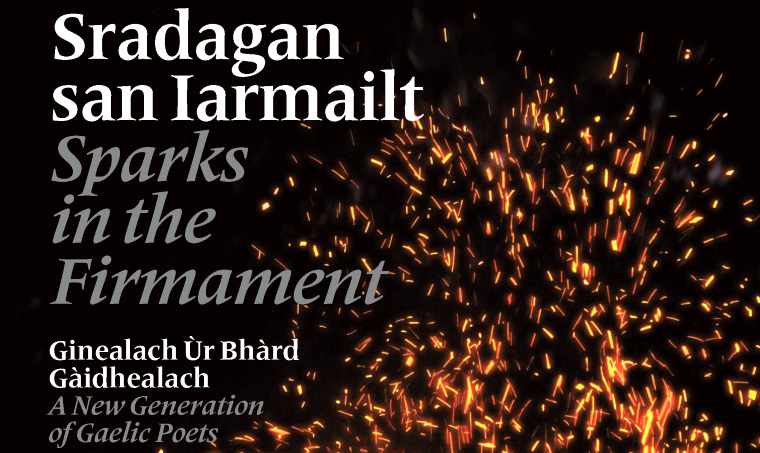
Once in a while, we might see a shooting star – flashes of cosmic dust that light up our atmosphere, like beacons from the heavens burning bright. The new anthology from Francis Boutle Publishers, Sradagan san Iarmailt / Sparks in the Firmament, reflects a similar phenomenon, bringing together a shining collection of Gaelic poets who have emerged since the new millennium. Editor Marcas Mac an Tuairneir assembled this fresh constellation of voices at a momentous time for the Gaelic language, following the appointment of Peter Mackay as Scotland’s first Gaelic National Poet, and the passing of the Scottish Languages Act recognizing Gaelic and Scots as official. Yet more than that, the anthology raises a diversity of relevant social concerns brought forth in language that is taking its place in contemporary literature.
And language is indeed the grounding force here, expressed through its literature and the stories it holds. Even with the recent changes within the Gaelic sphere, more remains to be done. As Tuairneir explains, “With the Scottish Languages Bill being designed and then on the table, it felt like the vocal anti-Gaelic backlash was coming to a close. Many of the poets in the pipeline are now being recognized.” Yet such efforts must still gather strength, he adds, since “contemporary Gaelic poetry still doesn’t get the critical attention that it deserves.”
The anthology arrives at a time of heightened cultural sensitivity and visibility, reinforcing its release.
“It felt like the time was right to push through the wall of Anglo-centrism that still encircles Scottish literature,” explains Tuairneir. The fact that Scotland chose Peter Mackay as Makar as the anthology was being completed made it even more significant. “That became an iconic moment in Scottish literary history, and one that signalled that equality might be on the horizon.”
And indeed, Sradagan san Iarmailt / Sparks in the Firmament reflects a cultural movement that has risen as a collective representation of a generation finally stepping into its literary maturity.
When choosing contributors, Tuairneir looked for both tradition and originality, seeking inspiration from earlier anthology editors while recognizing his own unique task. “I borrowed the methodologies of two successful anthologies and then melded them together,” he explains, noting the influence of Christopher Whyte’s An Aghaidh na Sìorraidheachd and Ronald Black’s An Tuil. Ultimately, he chose to highlight poets who had worked the language well in the past, while he also focussed on correcting past omissions and broadening the reach.
“I started on the basis that poets should have at least one full collection published and then opened that up to others who have published a similar body of work.”
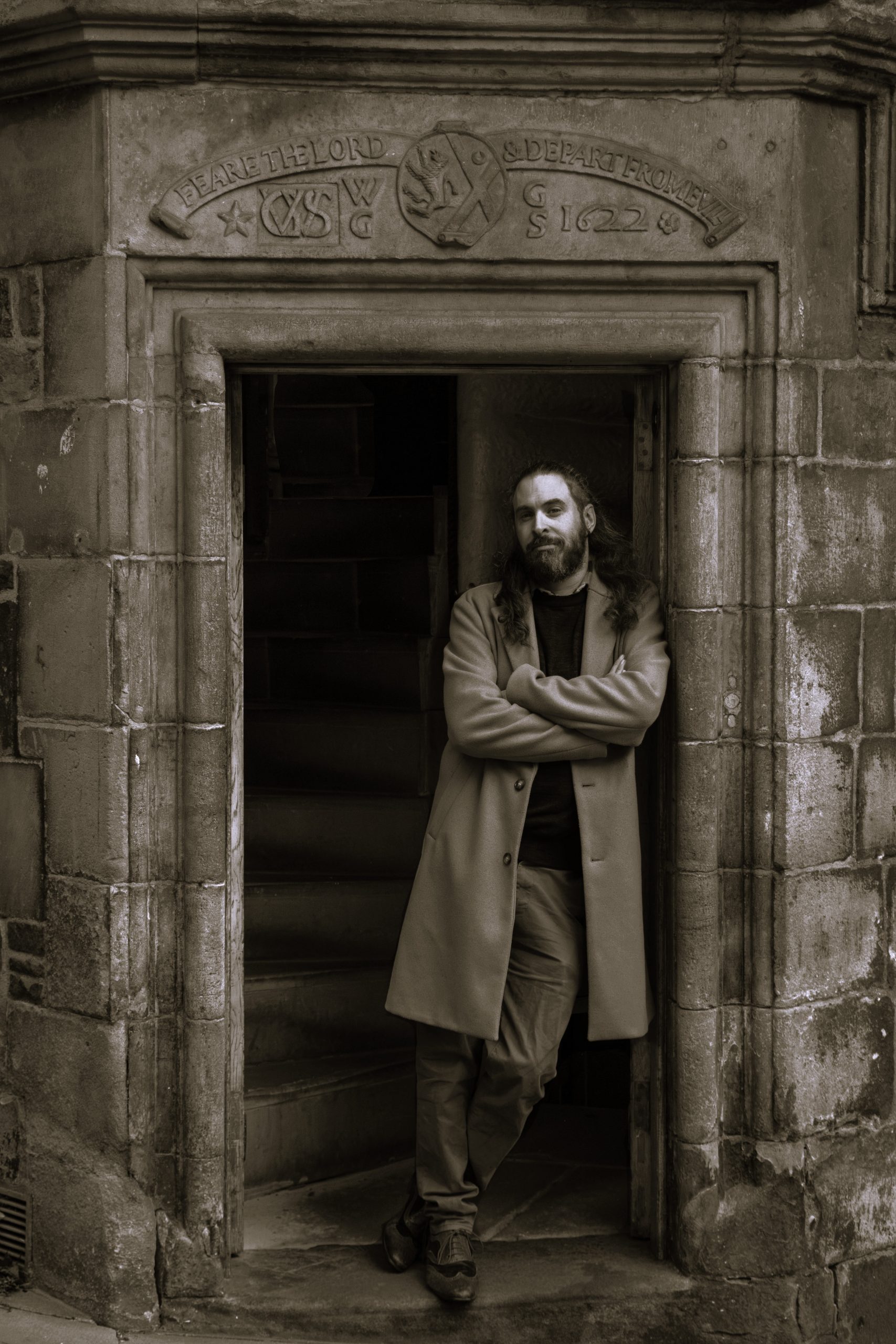
Tuairneir’s criteria were intentionally inclusive, reflecting the different ways Gaelic writers create and contribute today. Songwriters such as Mary Ann Kennedy are included “both as poet and songwriter,” while artists working in film, poetry, and spoken word, like Babs MacGregor, are recognized for expanding the scope of Gaelic literature.
His goal was not only to gather established voices but also to showcase those who have shaped the scene in sincere and meaningful ways. “Other selected poems reflect success in competitions and recent publication.”
The result is an anthology that honours a legacy and also introduces fresh creative work. “To be successful, it felt like an opportunity to gather fellow poets together so we can stand shoulder to shoulder,” as a cohort of Gaelic poets who have come to prominence.
A collection of this scale required not only variety but purpose in the reclamation of the language and its presence. Too often, he notes, Gaelic writers are handled as tokens rather than full participants in Scotland’s literary world. “It’s very common for Gaelic inclusion to reflect the minoritization of the language.” Festivals, competitions, surveys, and critical forums may welcome one Gaelic name, yet, according to Mac an Tuairneir, they are often overlooked by top editors discussing the literary potential of the country as a whole.
“The idea that a literary future for Scotland that excludes Gaelic might be promoted by practitioners who wield considerable power, or the idea that Gaelic literature has no future, is nonsense…”
As a firm step toward changing the narrative both literally and figuratively, Tuairneir has built a platform that refuses to let important voices remain on the sidelines. “Whilst there has been improvement in representation over the last twenty-five years, there is some way to go. Approaches to literature don’t currently make space for our native languages across the United Kingdom. This book allows us to assert our place on our own terms.”
Progress may be slow, but certain, however. Makar Peter Mackay’s presence in the anthology carries weight. Born into “deep Hebridean roots” on the Isle of Lewis and Skye, Mackay has spent his adult life moving between Glasgow, Barcelona, Dublin, Belfast, and Edinburgh, a pattern typical of islanders whose families have long histories of regional migration. Writing in Gaelic became his way of “connecting myself back to different ideas of ‘home,’ and to the culture I’d been brought up in.”
His evolution as a poet has involved learning to embrace the language more fully. Gaelic, he says, is “extremely mellifluous,” and over time he has allowed its rhythms to “flow a bit more.” While the title of Scotland’s Makar is “a huge delight,” MacKay also describes it as a “surprise, and responsibility,” and is “delighted to have had poems chosen for this celebration of contemporary Gaelic poetry.”
For contributor Anne Frater, the anthology ties into her lifelong relationship with Gaelic as “the language of the home and of most of the community” where she grew up in Lewis. She began writing in English as a schoolgirl, when a request asking senior students to compose poems in both languages led her to Gaelic. That early work resulted in publication, which she credits with shaping her future path and recognition that eventually led her to being named Bàrd a’ Chomuinn in 2025.
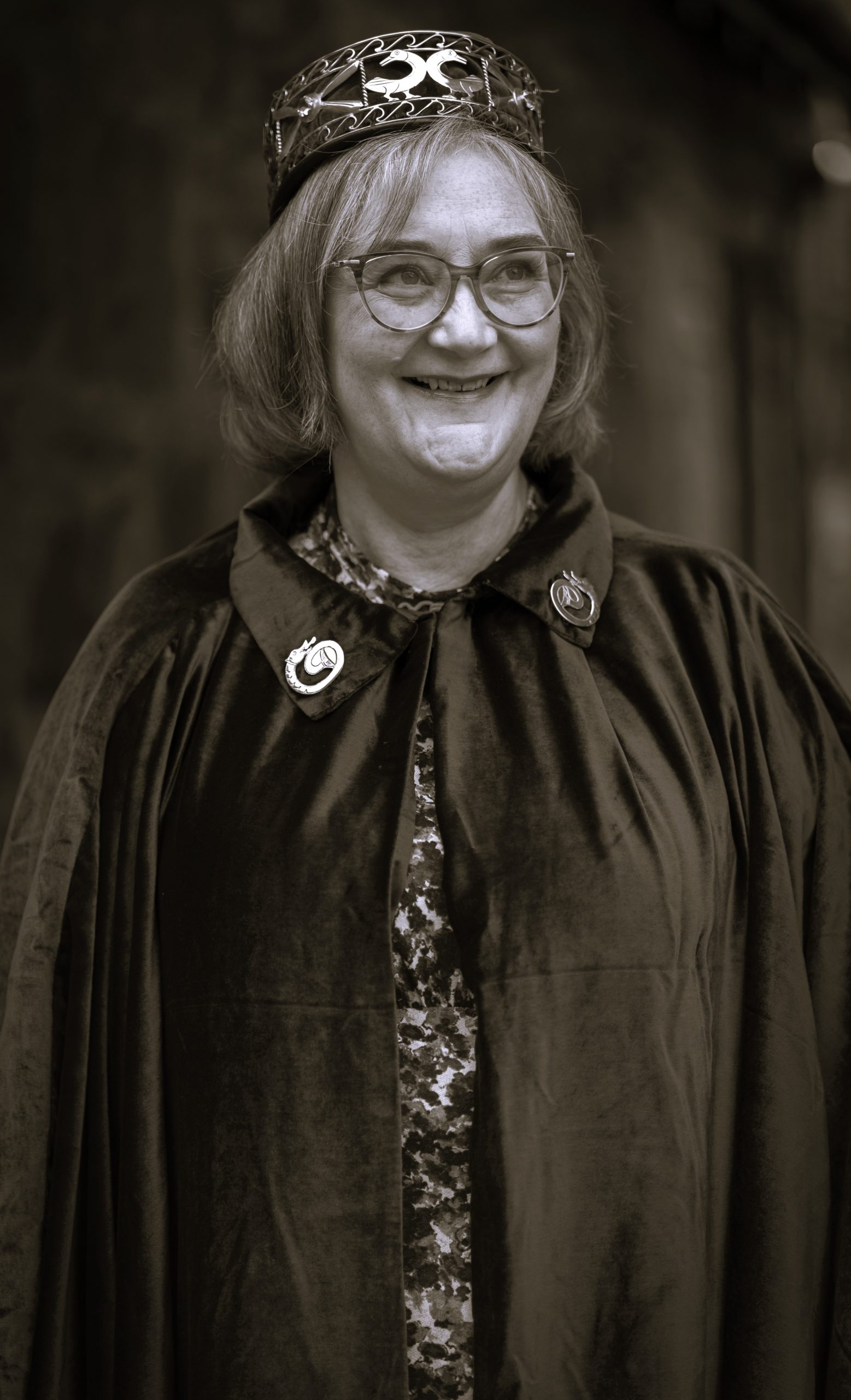
Yet Frater is clear about the fragility of the language. “It’s survival depends on communities, and they are dying out. For the first time in my life, as a speaker of Gaelic in the Isle of Lewis, I’m now in the minority, and that breaks my heart.”
Contributors and supporters can take heart, however. Both Tuairneir and Mackay see this moment as one of promise and responsibility. Even though Mackay recognizes that “for a nation of its size, Scotland punches above its weight with poets, novelists, playwrights,” he emphasizes that Gaelic writing still requires more visibility, even with the recent legal recognition of the language. “This is a great, significant, symbolic step,” he notes, “but it now needs hard graft to develop education, broadcasting, and arts,” Mackay says. Tuairneir agrees: “Be sure if we don’t use it, we’ll lose it.”
Their shared message is clear: Gaelic literature is not a mere remnant but an essential cultural force that demands and deserves space, readership, and continued investment.
And momentum appears to be building. The anthology launched at Edinburgh University on December 16 will be followed by a year of events across Scotland and beyond, with contributors bringing the work into public life.
The occasion is perhaps best summed up by singer and broadcaster Mary Ann Kennedy:
“Once in every generation, there comes a time to call in and hear each sing in one voice. The voices here, speaking from the precipice of a new era, have been gathered together to kindle the embers of the fire once more – to light a bright bonfire and illuminate the language.”
www.marcasmac.scot
@Marcas_Mac









Leave a Comment