

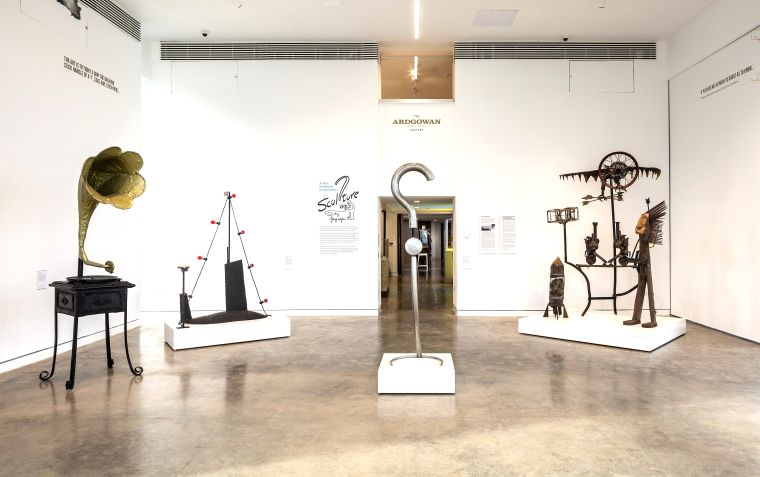
George Ralston Wyllie referred to himself as a scul?tor – a definition central to the enigma of an artist whose work often asks difficult questions and invites discussion. The purpose-built Wyllieum at Greenock on the Firth of Clyde, near to where he lived and worked, houses many of his creations. His whimsical approach to his art is perhaps part of the artist’s public appeal, but it belies a deeper look at the underlying themes of political decision making, social injustice, life, death, and what it means to be human.
Born in the east end of Glasgow on Hogmanay, 1921, it wasn’t until his late-50s that Wyllie became a full-time artist. His father was employed as an engineer and helped his son develop technical drawing skills while his mother encouraged him to draw, paint, play the ukulele, and appreciate the arts. He never received any formal art training, but his parents’ influence – combined with growing up in the nineteen-twenties and thirties by the bustling shipbuilding yards of the river Clyde – would sow the seeds of a talent that would blossom five decades later. It was a time of industrial-scale creativity; smoking chimneys, cranes, big boats, sparks from welding gear, and the clanking and clanging of metal.
Leaving school at fifteen years of age, Wyllie was briefly employed as an office boy before training as an engineer with the Post Office where, amongst other things, he designed manhole covers. WWII saw him serving in the Royal Navy, undertaking active service aboard HMS Argonaut. Shortly after Japan’s surrender, Wyllie visited Hiroshima, witnessing first-hand the devastating effects of an atomic bomb on a city and its inhabitants. It was an experience that would influence his future art and views of humankind. After the war he spent thirty years as a customs and excise officer before deciding to pursue his interest in making things.
Upon leaving his job he is reputed to have declared, ‘it is time for art.’
His first serious venture into the world of full-time creative work was a personal challenge that he referred to as his Ten Object Plan, declaring that he would make ten pieces and if at least one of them pleased him he would commit to spending his remaining years creating more. In the end he liked all of them. The final piece in the series of ten was a crucifix that was accepted by the Royal Scottish Academy and subsequently ended up in a church in Barrow-in-Furness. It was the moment when he would declare himself a real artist, even though a hint of uncertainty gave rise to his personally chosen nomenclature as a scul?tor. He believed that it was the artist’s role to pose awkward questions about the world we lived in and that such questions should not be an afterthought but rather placed center stage. The question mark became a central feature of his work – either appearing in physical form or simply by begging the viewer to ask their own questions about his art and what it stood for. In the mid-1970s, Wyllie held his first solo exhibition at the Collins Gallery in Glasgow before it moved to London’s Serpentine Gallery. Simply titled Scul?ture, it marked a turning point in his late-life career and brought him to the attention of art enthusiasts, promoters and patrons such as Barbara Grigor and Richard Demarco. In turn, they introduced him to international artist, including the American kinetic sculptor George Rickey and the German avant-garde sculptor and performance artist Joseph Beuys – both of whom influenced Wyllie’s art and with whom he became firm friends.
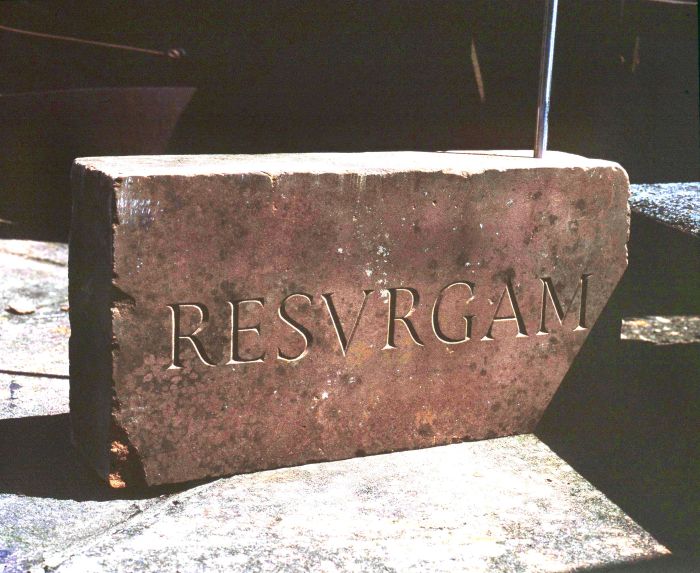
Throughout the 1980s, Wyllie produced some of his most profound and influential works such as The Straw Locomotive (1987) and Paper Boat (1989) both of which questioned ‘what now?’ after the demise of industries that had been the backbone of Glasgow’s heritage and prosperity. In its heyday, Glasgow exported thousands of locomotives to countries across the world. Wyllie created the life-sized Straw Locomotive and had it hoisted over the Clyde on the Finnieston crane – once famous for lifting the original locomotives on to the boats to start their journeys. It hung there for six weeks waiting for a boat that never appeared. It was then lowered, transported through the streets of the city to a site at Springburn where the locomotives were once made before being set alight, its empty frame revealing a trapped question mark. It marked a major moment in Wyllie’s career as a conceptual and performance scul?tor.
Similarly, Paper Boat, an 80-foot wire, gauze, plastic, and metal frame construction was launched on the Clyde. With Wyllie on board the pride of ‘The Origami Line’ he jokingly proclaimed himself the last boatbuilder on the river – at least ‘on paper’. Marking the passing of the great shipbuilding yards was the underlying question where do we sail to now? Paper Boat travelled to London, sailing up the Thames to the Houses of Parliament. It was, in part, a political gesture aimed at Margaret Thatcher’s privatization policies that rung the death knell for much of the nationally-owned shipbuilding industry that resulted in huge job losses and mass unemployment. Paper Boat hosted a question mark in the patriotic colours of red, white and blue, but Wyllie also added a tall mast from which the Scottish Saltire flew. This addition ensured that Tower Bridge had to be opened to make way for the boat! In 1990, Paper Boat made its way along the Hudson River, New York to the World Financial Center and, the following morning, to the front page of the Wall Street Journal. It had become less of a protest about the loss of local industry and more about a global economic system that undervalued the common man.
Glasgow loves its cultural icons to come from its working-class roots, and Wyllie is no exception.
A self-taught son of the city, he was granted an MBE for service to the Arts, declared an Honorary Fellow of the Royal Incorporation of Architects in Scotland, awarded a Royal Glasgow Institute of Fine Arts Honorary D.Litt from Strathclyde University, and a Fellow of Hand Hollow Foundation, New York.
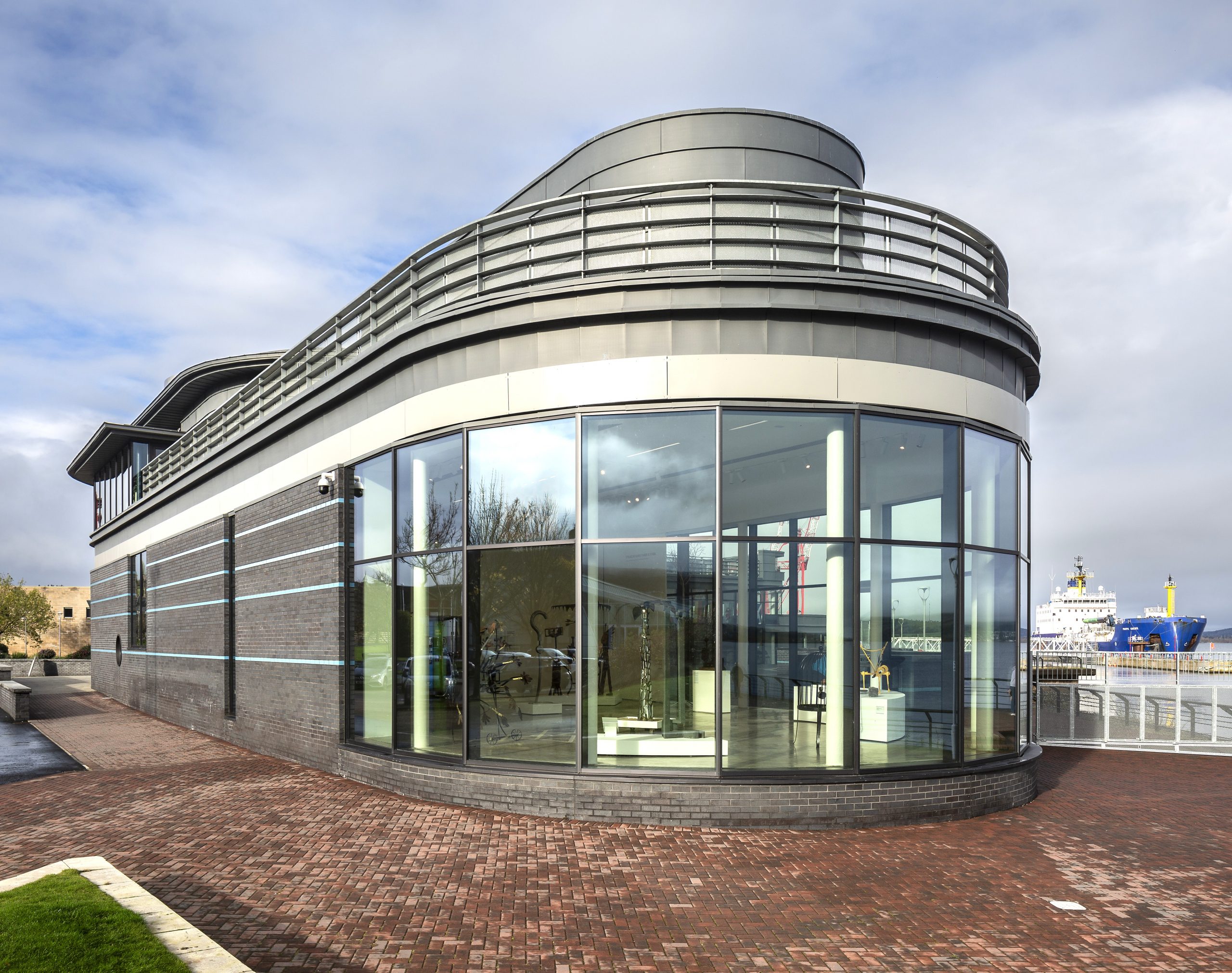
Although Wyllie passed away in 2012, his legacy remains. In 2024, the Wyllieum – a gallery and museum dedicated to his life and work – opened in Greenock. Sitting on the banks of the Clyde near to where Wyllie lived latterly, the Wyllieum is more than an exhibition space; in keeping with the artist’s views on social justice, equality and outreach, the George Wyllie Foundation seeks to help the disadvantaged in society including those with addiction issues and other problems by using art in meaningful and practical ways. These include providing a safe environment, running workshops, and participating in community projects. Current CEO of the Wyllieum, Willie Sutherland, knows first-hand the influence of Wyllie’s work and the importance of the Wyllieum. He was studying fashion in the early 1990s when Wyllie gave a guest lecture about conceptual art. Despite the following years being troubled ones of substance abuse and a mental breakdown, Sutherland found himself drawn back to Wyllie’s lecture. In 2021 he went into rehab and made the decision to follow Wyllie’s example and create a body of work over six months with a view to then ascertaining if it would be good enough to exhibit. Later the same year he was chosen to exhibit at the Centre for Contemporary Arts as part of the Glasgow International festival with his work featured in The Herald. It would result in him connecting with the Wyllie family, being invited on to the board of trustees of the George Wyllie Foundation, given a one-year appointment as a manager of the new Wyllieum and subsequently being made its CEO. Sutherland goes as far as to credit Wyllie with saving his life, “I doubt that I would be alive today if I had never heard Wyllie talk and discovered his art. It gave me hope, inspiration and self-belief.”
The Wyllieum is an essential visitor destination for anyone who wants to explore what it means to be a scul?tor. ~ Story by Tom Langlands
www.wyllieum.com
www.tomlanglandsphotography.com









Leave a Comment