

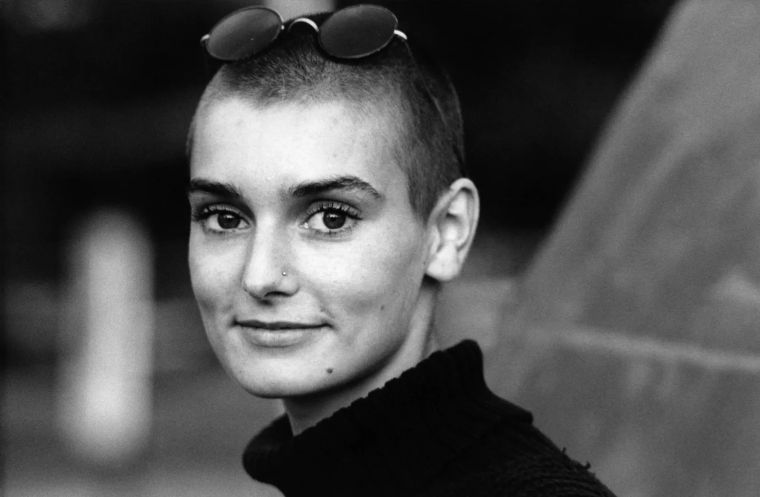
Sinead O’Connor’s voice was of the rare kind that did more than carry a tune – it seemed to hold something sacred. In the months following her 2023 passing, two writers found themselves among many who felt a hollow sorrow. American authors Sonya Huber and Martha Bayne managed their own grief by gathering an eclectic group of writers to articulate what Sinead meant to them as artists, activists, and human beings. The result is the recently-released anthology Nothing Compares to You.
Huber says that the initial motivation was simple. “We both experienced, along with many others, a surprising degree of upheaval after Sinead passed away, and the anthology was a way to both document and process that grief, and to look back at all the eras in our lives that she influenced.” She adds that revisiting Sinead’s work also resonated with a plethora of present-day issues. “Our recent years have felt like a rollback of our rights; somehow, looking back at previous decades felt like a way to summon strength for the next phase of our battles ahead.”
Like much of the controversy that surrounded Sinead during her lifetime, creating an anthology around the Irish icon was not without its challenges. Writers were required to choose a single song, a process that led to “instances where more than one writer wanted to claim the same song,” shares Huber. “We had a tight turnaround for the book. With more time, we could have solicited and included more essays.”
Bayne adds that with two dozen contributors, their work was cut out for them. “We wanted to avoid redundancies. We didn’t want every writer to relitigate the Saturday Night Live incident,” (referencing O’Connor’s now-legendary tearing up of a photo of the Pope on live TV). “We also had a challenge in the use of song lyrics in each essay. The entire concept of our book rests on close readings of song lyrics.” As such, many writers had to rework their essays, a process Bayne ultimately sees as strengthening the collection. “It forced them to really dig into their own interpretative reads rather than relying on Sinead to make the point for them.”
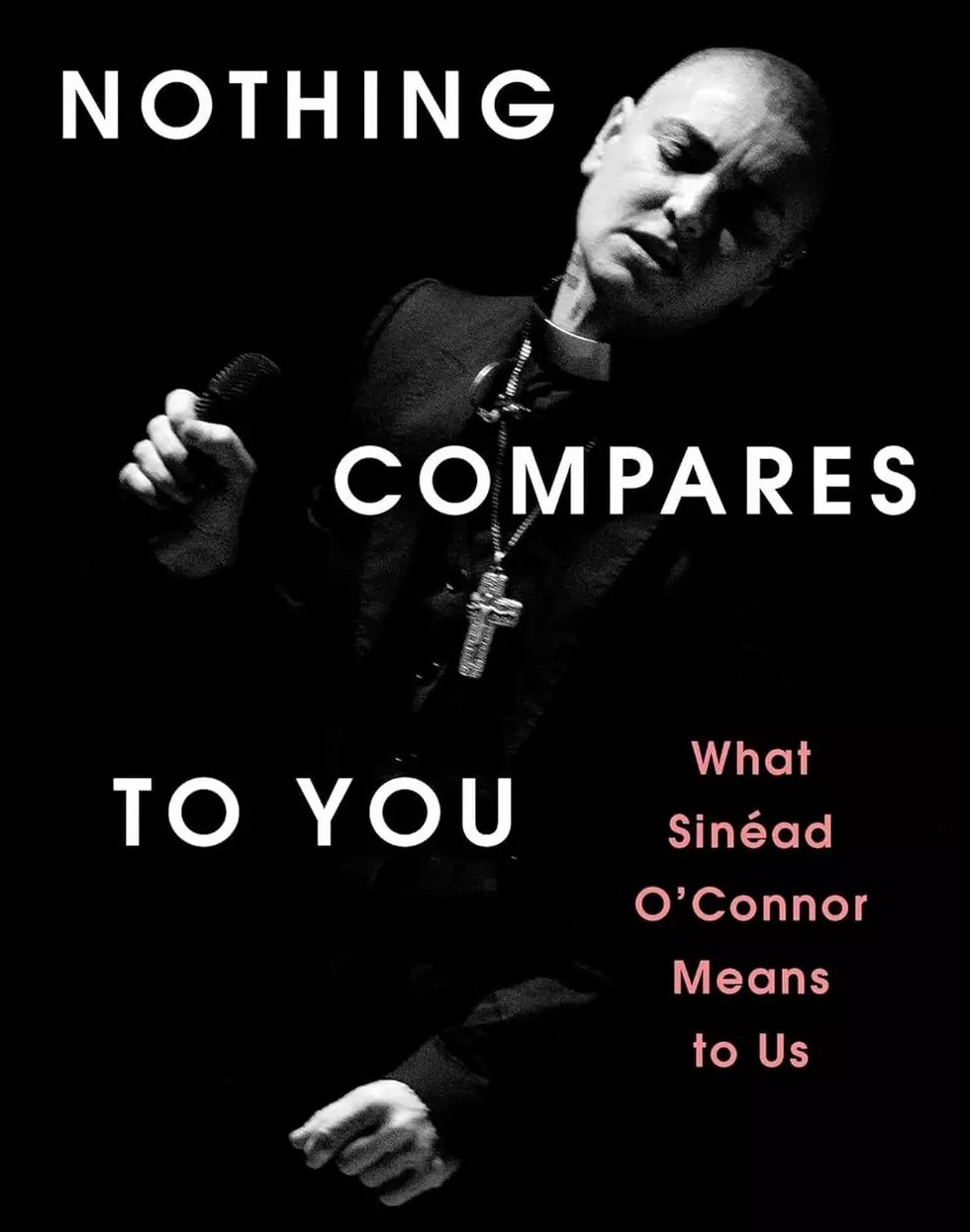
Judging from the positive response, the extra effort proved worthwhile. “The main rewards of this collection have been to see how vast her impact was,” notes Huber. Bayne reflects on the joy of sharing the book with audiences, particularly during events in Dublin and at the West Cork Literary Festival. “Connecting with readers and other writers both here in the United States and over in Ireland has been incredibly nourishing.”
Working on the anthology also deepened Bayne’s understanding of Sinead’s catalog and history. She recalls doing “a deep dive into the material of the other writers,” including Sarah Viren and Nalini Jones, who broadened her perspective with the real stories behind the song “Black Boys on Mopeds,” to seeing Sinead “through folk-colored glasses as part of a lineage of protest singers.” Huber views the anthology as the ultimate testament to the singer.
“This book is important because she was, and is, so important. Sinead helped many of us navigate periods where we needed an icon of courage. She was devoted to telling the truth despite the consequences.”
Both editors see potential readers as anyone touched by Sinead’s music. So far, the critical response has been solid, with warm reviews and particularly strong support in Ireland. As Caryn Rose of Salon wrote, “The anthology is filled with story after story of survival that was manifested by the sound of O’Connor’s voice. They are beautiful.”
As to whether Sinead is now considered a cultural icon, Huber does not hesitate. “I think she was, even when she was alive. There’s an unfortunate trend in the U.S. of female musicians not being given the status of “icon.” Bayne agrees. “At one of our book events, an audience member asked, ‘What was it the rock boys missed about Sinead?” and the answer to that was, ‘You missed it because she was a woman.” Both editors emphasize that Sinead’s refusal to fit any predetermined category made her difficult for some in the mainstream to grasp but cherished by the listeners who needed her.
Regardless of her categorization, it is clear that Sinead O’Connor’s voice still resonates, as Huber muses on its power and integrity. “She engaged so movingly with her own stories and social challenges, and she stood up to oppression. She is the role model of resistance that we need right now.”
www.sonyahuber.com
www.marthabayne.substack.com








Leave a Comment