

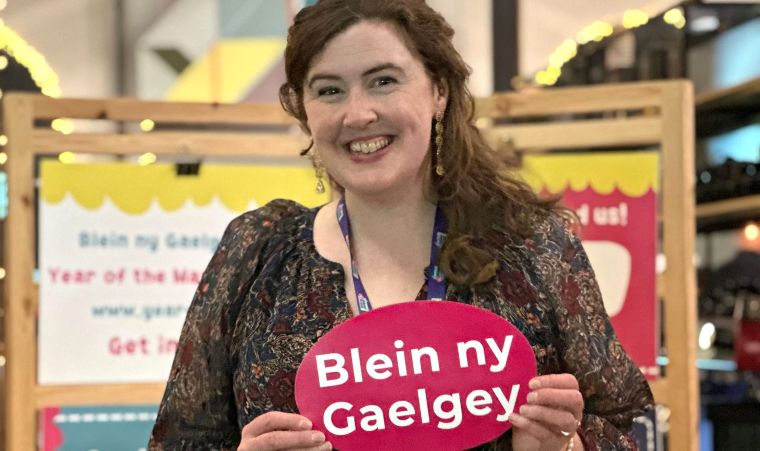
The Isle of Man is celebrating its heritage and language this year as communities across the Island and beyond will mark Blein ny Gaelgey – the Year of the Manx Language – a far-reaching cultural initiative designed to revitalize and reimagine Manx for a new generation. Organized by Jeebin, the Manx Language Network, the Year invites everyone to participate, whether they are fluent speakers or beginners just learning how to say Moghrey mie (“good morning”) for the first time.
For Ruth Keggin Gell, Manx Language Development Officer at Culture Vannin, the Year represents both a celebration and a responsibility.
Keggin Gell’s official title in Manx Gaelic is ‘Yn Greinneyder’, which translates to ‘the Encourager/Motivator’, perfectly fitting her role. “The title sums up what I do. I work with the community to develop Manx Gaelic as much as possible, and to encourage and motivate others to use and protect it.”
With deep personal ties to the island – her father’s family hails from the Isle of Man and her mom is half Manx, half Scottish – Keggin Gill believes that “learning the indigenous language can help people feel closer to the Island, whether it’s the place of their birth, their chosen home, or somewhere they have ties or would like to have ties to!”
Along with teaching and promoting the language, her work with Culture Vanin includes coordinating events, broadcasting, and networking with other groups. Involved with the organization since she was a teenager, Keggin Gill’s commitment is as clear as her perspective on why the Year of the Manx Language truly matters. “Manx is spoken by around 3 per cent of the population in the Isle of Man – it is a minority language and categorized as ‘critically endangered’ by UNESCO. We need to consider things like succession planning,” she warns, emphasizing that the responsibility remains with elders to carry the language forward to younger generations.
The goal of the organizers of The Year is simple but profound: “Manx language for all…”
 In addition to promoting the language, the aim is to increase participation, inspire creativity, and establish a lasting legacy for future generations. The focus is on five themes: young people and families, identity and sense of place, community and creativity, research and resources, and lifelong learning, which will guide hundreds of events and projects.
This is where Jeebin and the plans for 2026 come into play. “With a relatively small number of Manx speakers on the Island, it is absolutely crucial that we communicate with each other regarding new projects. Jeebin was set up to coordinate efforts and maximize output, which ultimately led to the idea of a year-long celebration of Manx – Blein ny Gaelgey.”
The 2026 calendar is already full and includes the premiere of the world’s first Manx-language opera, concerts featuring major Celtic artists, and an expanded Manx language summer school with options both for beginners and also for Irish and Scottish Gaelic speakers who want to learn Manx.
“Culture Vannin has also enabled the community to apply for grants through a special Year of the Manx Language fund, and smaller defined projects called ‘Treisht’ projects, and we can’t wait to share some of the outcomes of those throughout the Year.”
The Year will also extend beyond the Island’s borders. “There will be a short set of lessons specifically designed for those who live in North America or the Southern Hemisphere, led by an advanced Manx learner in Pennsylvania.” These weekly online sessions for beginners will run from January to April, with more online initiatives planned as the Year unfolds.
With inclusion as the abiding theme for The Year, participation for all is emphasized as both a right and a duty. “Things like a morning coffee where people use some simple Manx can make a difference to the visibility of the language in the community,” Keggin Gill explains. A toolkit on the initiative’s website provides bilingual signage, printouts, and a variety of ideas for hosting Manx-related events and gatherings.
Thankfully, Keggin Gell sees growing enthusiasm among young people. “When I was younger, Manx culture and Manx Gaelic were not nearly as popular as they are now,” she notes, crediting traditional musicians and dancers with popularising the language at home and abroad.
“The Manx language and culture are woven into the very fabric of our Island; they give us a sense of place and community that connects us all.”









Leave a Comment