

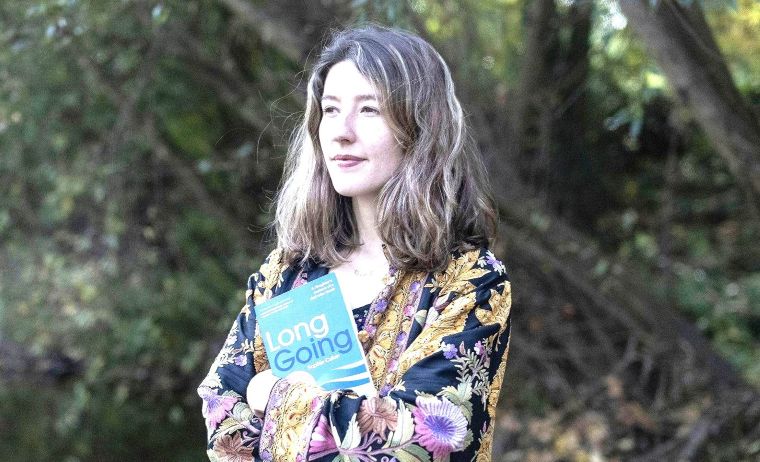
Many writers draw on their childhood experiences, but for Sophie Calon, writing began as a way of sorting things out when she was just a wee lass.
“When I was five, my dad sat me down to write,” she shares via email. “I’ve been making notes about life ever since. Finding the right words helps me to think and feel better.”
Born and raised in Cardiff, Wales, Calon describes herself as “state-educated,” having studied classics at Oxford University before training as a journalist in her hometown. She now lives on the Welsh border with her husband, daughter, cats, and cows, “where we are returning nature to our surroundings.” Motherhood and the slow pace of rural life have since shaped her approach to writing.
“I am shifting genre and turning to fiction drawn from life and history.” That shift has come with some adaptations of her method of ‘pen to paper.’ “Since becoming a mother, I write more quickly and am less precious about exact words or phrases, simply because I have less time to linger. I also think harder about why I write and make sure I’m doing it for the right reasons.”
Those purposeful reflections are at the heart of Long Going, Calon’s deeply personal book about her father’s life and death from alcoholism. “It’s a story of my dad’s presence and absence in my life – he was my greatest influence until alcoholism took him.” When her father passed at 55, the reflection began immediately. “I began writing Long Going the next morning. I knew my dad would want me to tell our story.”
In writing that story, Calon draws a powerful portrait that, while a tribute to her love for her father, his wit and eccentricity, also recounts his unravelling. Not merely a chronicle of her family’s difficulties, the book is ultimately a tribute to her own commitment to resilience.
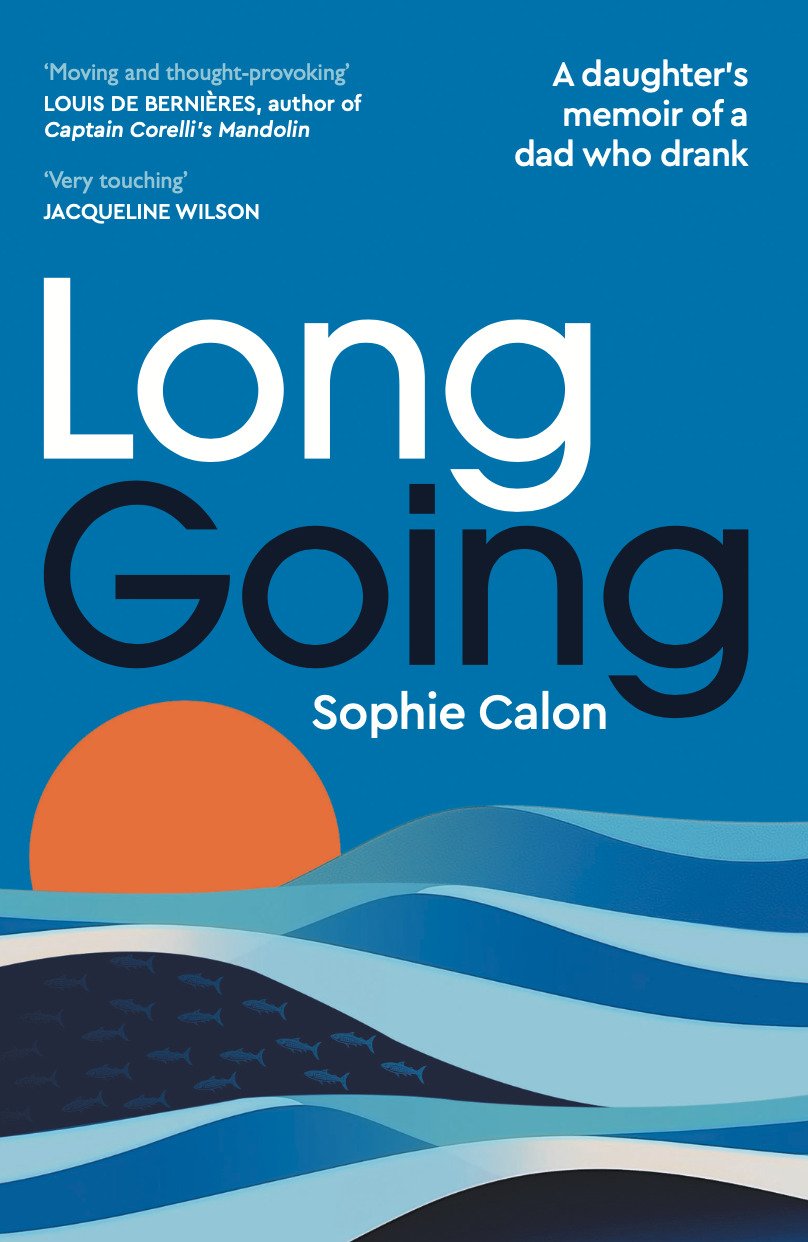
Calon’s father influenced her craft from the start. “He always said, ‘write what you know,’ but this book is about what I can’t know as much as what I do know.”
The balance between love, loss, and unanswered questions flows through the work, which she approached honestly.
“I was very aware of the inherent risks of sharing such a personal story, particularly the possibility of hurting anyone or of being judged. Thankfully, neither seems to have come to pass.”
Calon edited the book during maternity leave, a period that was already full of demands.
“It was quite a challenge, but also in some ways a relief – an opportunity to switch on another part of my brain.” Research involved poring over the many fragments of her father’s rough periods. “I had to read and reread a lot of written documents – emails, texts, notes, letters – to try to make a coherent narrative of this story.” Some moments were painful. “Revisiting some of the old messages between my dad and me brought highs and lows. There was love and anger.” With those, however, came clarity. “Looking through my dad’s notes from the time when he was homeless and in prison was difficult, but even so, his sense of humour shone through.”
Publishing the book brought Calon not only a new sense of perspective, but a newfound community. “Without a doubt, the most rewarding part is engaging with readers and other writers. I have done over 20 events and loved every single one.” Each conversation, she notes, brings “new ways of looking at things and a growing sense of solidarity.”
That sense of connection has evolved into a growing awareness, which Calon is keen to share. “The most significant realization I’ve had is that I am far from alone. One in five children in the UK is thought to be impacted by a parent’s drinking.” Through the book, she connected with Nacoa, the National Association for Children of Alcoholics, a free helpline that received over 37,000 calls last year. “I was shocked to learn that all funding for children of alcoholics was cut in 2021. This needs to be corrected.”
For her part, Calon continues to craft meaning from memory that keeps on resonating with readers. “I’ve received hundreds of notes from across Wales and the UK, Australia, and the US. It has been an extraordinary experience. In some ways, I don’t think the book will ever really be ‘completed.’ The ending was a new beginning.”
@sophie_calon_













Leave a Comment