

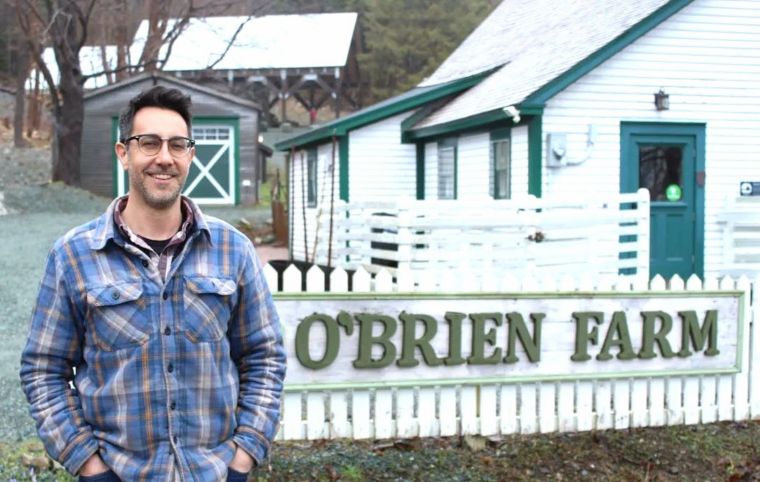
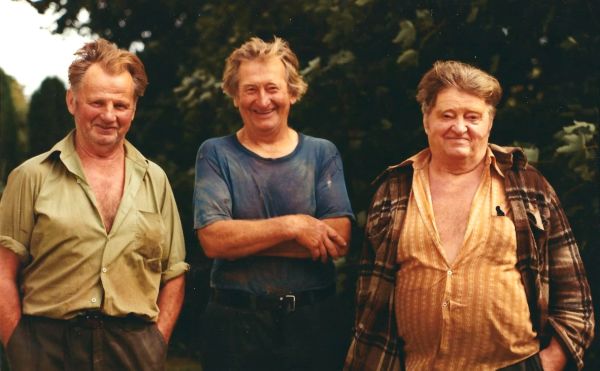
The O’Brien family farm in St. John’s, Newfoundland is a throwback in time. The simple rural dairy farm started four generations ago, eventually winding up in the care of three brothers – John, Mike, and Aly – the last of their name.
“The lineage of the immediate family ended,” laments Aaron Rodgers, who oversees the O’Brien farm nowadays. “They were icons in the community because they lived such a traditional lifestyle managing a small, funky dairy farm as development kept encroaching around them.
Interestingly, none of the three brothers ever married, and none had children.
“When the last brother passed away in 2008 – his name was Aly O’Brien, his other two brothers passed a couple years before him – the farm was kind of left to the community to figure out what was supposed to happen with it. Aly had requested the rights of the farm be kept in agriculture and pushed for the exploration of Irish and Newfoundland history – Celtic history.”
That’s when Rodgers came in. In the immediate aftermath of Aly’s death, the question was how to fulfill his last request, and Rodgers was hired by the O’Brien Farm Foundation to become the general manager of the property and be part of figuring out those minor details.
“I was hired on to rebuild a lot of it, and reimagine it to a certain extent. I’m from the U.S. originally, my wife is a Newfoundlander. There’s kind of a joke among expats that come back to Newfoundland – that Newfoundland has this government program where they send all the really funny, good-looking people around the world to get married, and then bring us all back to the island.”
Rodgers drew upon his past for his current position.
“I grew up in an agricultural community. I’ve worked with wine grapes, which is what my parents have done for a long time. I have a master’s degree in agricultural economics. Before I moved here, I was the executive director of the Mississippi Agriculture and Forestry Museum. I was in the Peace Corps as an agricultural extension agent – I worked in Senegal in West Africa for two years, growing corn, millet, and sorghum. So, I have an understanding of production agriculture and the economics and business development side of things, both on the local level and on a global level.”
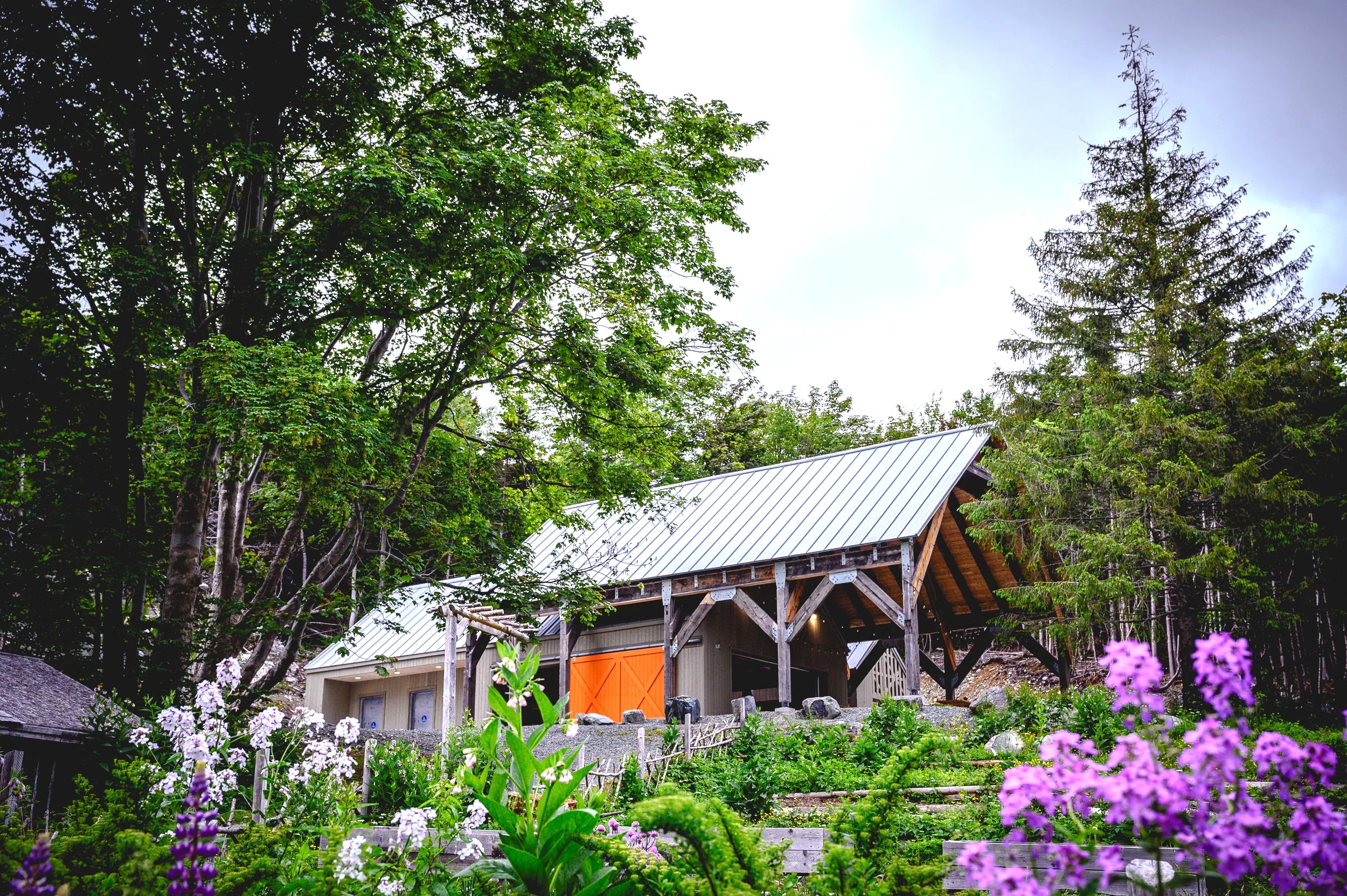
Over time, Rodgers successfully rebuilt the old O’Brien farm into a living museum, where the traditional farming practices are kept alive for current and future generations to learn from.
“Aly O’Brien and his brothers were trying their best to preserve a way of life that was dying out. It had existed in the 1970s, 1980s, and 1990s as this iconic farm where there was this sense of history and interpretation.
“Aly was kind of an amateur historian in a lot of ways. He was really good about journaling and writing what he was seeing on a daily basis here on this farm, so we do have a really good records of how it worked.”
The O’Brien’s old farming wisdom isn’t just learned and appreciated for its own sake. Rodgers espouses that traditional farming practices like the ones that built the facility can still be useful in modern agriculture today.
“Our flagship program here is a farm incubation program. We’ve got five farmers right now that are in season four and five, and they all have their businesses pretty well set and are reaching out into trying to find sole proprietorships and their own farmland. We have another cohort of six farmers waiting in the wings also.
“The program affords young people, mostly new entrant farmers, an opportunity to have land, to have access to equipment, to irrigation, to infrastructure, and to have expertise available while they develop their own farm.
“It’s not just ‘go work on a dairy farm’ kind of thing; you buy your own goats, your own sheep, and raise them here on the farm; or you’d start a vegetable operation, start at the farmers market and then move to direct sales to the restaurants locally. One of our farmer’s first big sales was to one of the top restaurants in Canada; he didn’t know how to write an invoice – he didn’t know what an invoice was – but he knows how to grow hakurei turnips like you wouldn’t believe.
“These are points of pride for us – that we can provide people the opportunity to develop their own success…”
In a world that produces more food than ever in human history, starvation statistics have never been higher. Rodgers considers the most important work that the O’Brien farm does is to satiate the human need for community.
“What we’re trying to do on this micro-level – and I get it, we’re not changing the world here by any means – but we are demonstrating that you can exist and you can have a good life as a farmer, because a good life is about providing for your community. I’m by no means a cultural geographer, historian, or anything, but in my experience with the Celtic diaspora, there is an identity around food that nourishes the soul and brings people together.
“We look to provide as much as we can – to folks that want turnips, potatoes, carrots, and everything you need for that Jiggs dinner twice a month, as well as for new communities that are coming in, immigrant communities and the like, that are looking for food ways and products that kind of fit their diaspora.
“That level of human currency is vital, and it’s just as vital to produce food – something that nourishes all of that, nourishes the community, and provides that sustenance. If we lose it, it’s gone.
“I think what we’re building here could be a model for all over. Certainly, in Atlantic Canada, but I’d say probably a lot of the Celtic diaspora would benefit in this; both that understanding of history and culture, as well as agriculture, providing that sustenance for our bellies and our souls.
“What we’re doing is a people-driven. The technologies aren’t going to save us all – we still have to know how to do things. We still have to use our bodies to make these things happen. I’m always impressed when people start learning how to do it and get good at it, how happy they are.”













Leave a Comment