

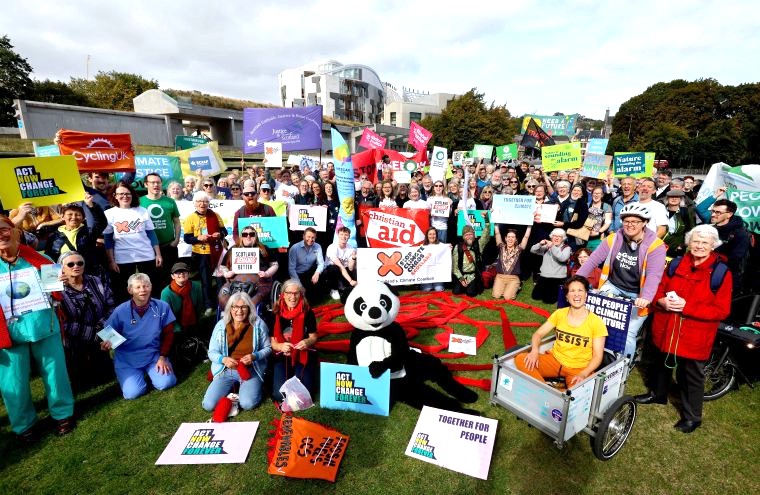
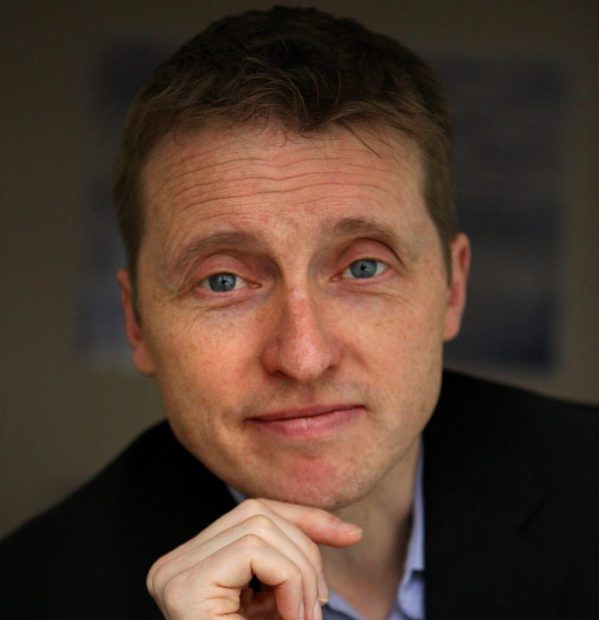
Dr. Mike Robinson (OBE) is chair of Stop Climate Chaos Scotland (SCCS), a coalition of more than 70 organizations campaigning together on climate change. The coalition came together in 2007 to provide a strong civil society voice to feed into development of Scotland’s first ever law on climate change, the Climate Change (Scotland) Act 2009. Since the 2009 and 2019 Climate Acts were passed, SCCS has campaigned for action to deliver on national commitments, and for Scotland to play its fair part in achieving international goals and tackling climate injustice. Dr. Robinson is also chief executive of the Royal Scottish Geographical Society.
What are your roots, and where do you currently reside?
I’m lucky to come from Perth, where I still live and work. Not only is it a beautiful place, with the mighty River Tay running through it, but the city was the historical capital of Scotland and stronghold of the Picts. It is also the geographical heart of the country. The local area is also blessed with amazing landscapes and wildlife. I’m very interested in Perth’s Pictish heritage and have been carrying out a load of research on that. It was the seat of the southern Picts as well as the coronation point of monarchs right up until at least King James I. Scone Abbey formerly housed the Stone of Destiny, on which Scottish kings were traditionally crowned.
When and why did you get involved with SCCS?
Probably the main thing that drove me to get involved in the climate movement was because, coming from Perth, I have a very innate understanding about the quality of the environment and I’m really keen to keep protecting it – both for myself and for future generations. I saw the need for action and leadership in climate change. People weren’t talking about it enough, despite recognizing it as an issue since the 1980s. It really needed a step up of action, more commitment, and there was a huge latent public concern over climate change but not a clear place to gather and coalesce around the issue. That was why Stop Climate Chaos Scotland was formed. It really provided that rallying point and a place where people could come together to learn more and share their concerns.
What are your roles & responsibilities there?
I’ve been SCCS chair twice and a trustee for most of the past 20 years. It is quite hands-on because it’s a fairly small charity. It has always been a coalition, so it has been a representative body for anything from 50 different charities to the 75 members we have today. My own work includes chairing and coordinating a board and managing responsibilities, inputting to policy and media work, and also, I like to think, providing vision, learning, training and networking for the whole of the climate community in Scotland. My role also includes representing Scotland on the international stage – such as going to the European parliament for a citizens’ agora on climate change back in 2010, where I represented the whole of civic society in Scotland – so helping others in other countries develop what they’re doing on climate, hopefully encouraging others to get involved and sharing what Scotland was up to.
 What are the challenges involved?
Getting action – not promises. And also realizing that the science isn’t enough, overcoming some of the toxicity surrounding environmental policies, focusing on solutions not problems, and all the while trying to maintain your own mental health.
What are the rewards?
The rewards are many and varied. First of all, there is the success when policy actually does kick in – everything from the 2009 Climate Change act to commitments on the likes of road mileage reduction targets, electrification of rail and road transport, air passenger duty, intro of a climate justice fund and loss and damage commitments at COP26 and COP27. The other big success is seeing sectors of society empowered by the legislation and the momentum around climate change, seeing the positivity in Scotland to actually embrace change and innovate and lead the world, I think that’s really positive. And it’s also working alongside the many policy and political minds in the NGO community. I think all of those things are successes.
What is the organization’s core mandate?
SCCS’s focus is on action, both nationally and internationally, and the ability to win change. The coalition has contributed to Scottish policies and initiatives across many areas over the years, including transport, housing, climate justice, just transition, and loss and damage support.
How has it evolved over time?
Over the 20 years since SCCS was founded, we have grown to represent a fifth to two fifths of the Scottish population. Our focus has shifted from large-scale targets to specific actions in every sector. What is needed has also changed over this period and so has the urgency. Now, although we have achieved a lot in two decades, we still have a huge amount to achieve – and only 20 more years left to do it.
Why is the work you and your peers doing more vital than ever?
When you’re talking about the biggest issue to ever face humanity, how could it be anything else? And we’re rapidly running out of time to change the direction of travel.
From your perspective, are young Scottish people more “green friendly” than previous generations?
Yes, absolutely, I think young people today are more aware of environmental issues than previous generations, but they are also mystified and frustrated. Considering that so many people seem to understand climate change and the science is unequivocal, they don’t really understand why we aren’t sorting it out. This was especially true in 2019, after massive school strikes and calls for action from young people. They felt like it was a real kick in the teeth when their efforts saw no substantial changes or shift in momentum.
How can the general public get more involved?
Everybody needs to understand climate change and the solutions as much as they possibly can. They need to keep championing it, for instance by picking a solution they like and promoting it – the issue needs lots of solutions. People can join any one of the 75 member bodies in the SCCS coalition and help drive the agenda that way. Or they can just literally make sure their local politicians know this is an issue they are concerned about. These are all invaluable ways of pushing for action.
Is the Scottish government doing enough to support eco-sustainability initiatives?
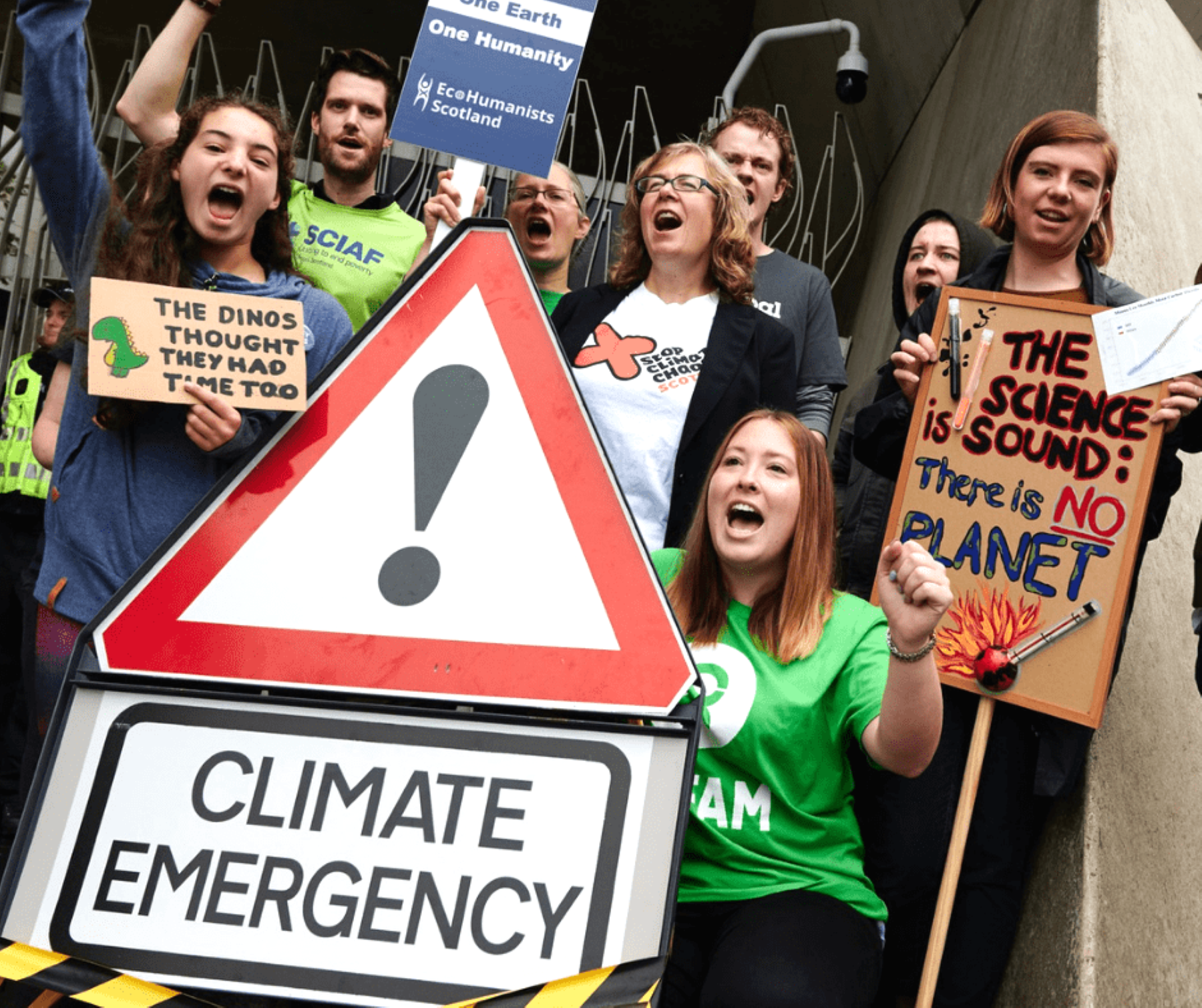
No, not recently anyway. They have done a certain amount over the past 20 years, but in recent times there has been a complete lack of direction, vision and leadership. I think this has sort of filtered out because of a backlash from small groups against some of the net zero agenda, leaving ministers a bit rudderless. So no, the Scottish Government has not done enough and needs to do more.They need to lead the changes that are necessary, not follow at the pace of the most reluctant.
How has the internet (& AI) had an impact on what you are doing?
I don’t have a lot of good things to say about either the internet or artificial intelligence. I think digital tools have cheapened communications and coordination but have made it much harder to reach people due to algorithms making it tricky to break through to certain groups. This means it’s difficult to counter the spread of misinformation. There is a huge number of bots and a load of toxicity online, which has driven polarization, along with algorithms that keep repeating what we already know. So, the issues have become much more divisive. To be more successful in getting the climate messages across, it is really important that we break down these divisions and reach a consensus. Climate breakdown is too big an issue. It affects everybody, and we all need to play a part in helping to solve it.
What’s on SCCS’s agenda for the rest of 2026?
We need to make up for a slowdown in climate action. This government is going to be vital, and we cannot afford to miss another four or five years of delivery, so SCCS’s work will focus on housing, agriculture, transport, energy and, I believe, education and skills. SCCS is the biggest coalition ever formed in Scotland, but I think we need to go bigger still and drive the change we all need to see.













Leave a Comment