

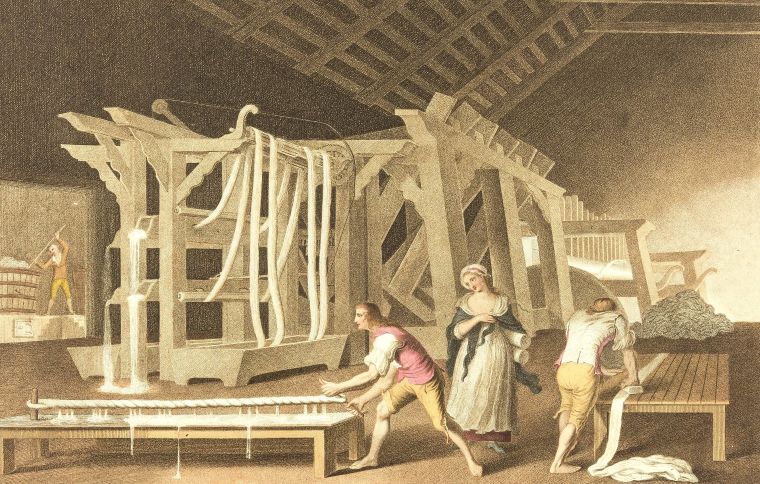
Irish linen is more than just a fabric – it is a feeling. Cool and crisp to the touch, it carries both the freshness of flax fields and a rich heritage shaped by people and the land from which it is grown.
Historian Wallace Clark once called Irish linen “the aristocrat of fabrics” – a phrase that reflects it’s prestige. Yet, much of its value lies in the work of the humble mill workers whose hands transformed it into a legacy. Clark also noted that linen was “strong as steel and delicate as silk,” reflecting both the fibre’s qualities and the craftspeople who shaped it.
Today, Irish linen is finding new meaning in everyday life, sustainable fashion, places that honour lineage, and in the efforts of artisans who continue to carry the craft forward. For centuries, Irish linen has embodied tradition, holding a lasting place in the modern world.
First Threads
Long before weaving looms appeared in factory towns, flax flourished in Irish fields. By the 11th century, the sturdy plant was being cultivated for everyday garments, and further research suggests that it was used in ancient rituals and ceremonies.
In early Celtic and Christian Ireland, linen had more than mere practical uses. It clothed the living, shrouded the dead, and hung in mythical spaces as a symbol of purity and blessing. The cloth connected the hands that harvested it to the land and to the seasons. Flax sown in spring and gathered in summer created a rhythm that bound soil, climate, and people.
Craftwork was always symbolic in Irish tradition, and few figures embody this more than the Goddess Brigid, closely linked to the work of the hands and hearth. As one folkloric study notes, “Apart from smithwork (sic), her crafting sphere includes weaving, brewing, and dyeing.” Although not specifically tied to linen in early texts, the annual weaving of St. Brigid’s Crosses connects her to the interlacing of fibres and the protection of the home as a guardian of a craft that shaped everyday Irish life.
For centuries, the preparation of flax took place in small rural communities. It evolved into a sacred task passed down through families. Flax grew beside nearly every cottage, and families and workers spun not only thread, but an identity shaped the social fabric of Ireland long before mills and industrialization.
Ulster Linen
By the 17th century, Irish linen had evolved from a local tradition into a significant commodity on the global market, centred largely in Ulster. According to the Lisburn Museum in Northern Ireland, the Huguenots played a major role in the fabric’s origins. “They arrived in Ireland … in 1685, and many settled in Lisburn. They brought their skills in weaving and finishing linen,” reads the museum’s website. It also names Louis Crommelin (1652 – 1727), as the founder of the Irish linen industry, “who established a weaving factory at Bridge Street” in Lisburn. The Quakers from the north were also influential in establishing linen as a valued textile.
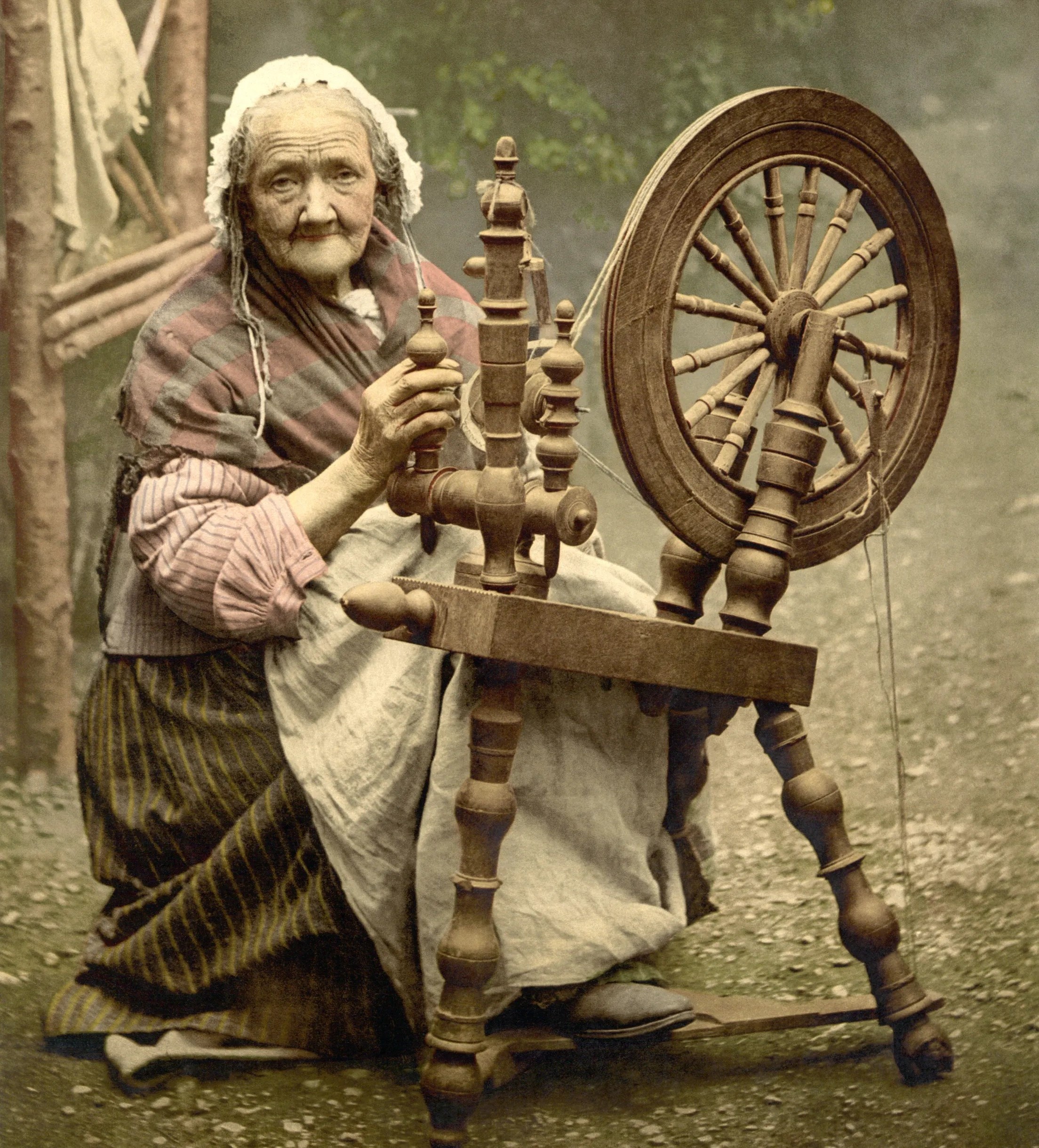
By the late 1600s, the statesman Sir William Temple wrote that he wished “to promote the linen manufacture in Ireland…to beat down the trade of both France and Holland and draw much of the money…into the hands of His Majesty’s subjects of Ireland.” His view reflected an early political understanding that linen could ensure Eire’s prosperity.
As the craft progressed over time, so did the techniques and artistry for linen manufacturing.
Damask weaving, with its intricate patterns and satiny finish, became a defining feature of Irish linen, bringing elegance to an everyday cloth. Table linens, christening cloths, and altar coverings were fashioned as symbols of prosperity and good taste. Eventually, fine linens were reserved for only the most special occasions.
Linen also travelled with those who left Ireland, becoming part of the immigrant story. Packed into trunks, the fabric became a reminder of heritage for many who carried it from the landscape that shaped it. As a reader from St. Louis recalled in Threads of History: “I found the most beautiful Irish linen tablecloth, yellowed with age but still incredibly fine. My great-grandmother brought it with her when she left Belfast in 1912.” Stories like these are reminders that linen was more than cloth – it was a piece of home.
The Cultural Thread
The economic and cultural significance of linen continued to be acknowledged centuries later. In 1917 – around the time that Belfast became known as “Linenopolis” – The Irish Times wrote, “It is to William III and his Linen Controller of those days, Louis Crommelin, that the Emerald Isle really owes the prosperity of what may well be described as her chief industry today, the linen manufacture.”
Beyond industrial success, however, linen has held a special place in Irish life for centuries. Celtic knots, shamrocks, and Celtic crosses are often incorporated in traditional Irish linen, and it has long been part of life’s important milestones: baptismal gowns, wedding handkerchiefs, Sunday tablecloths, altar cloths, and funeral shrouds. Beyond ceremonial uses, articles of linen functioned as vessels of blessing and lineage.
Victoria Finley, author of “Fabric: The Hidden History of the Material World”, correlates linen with the literal fabric of our lives when she wrote, “Thread is as good a metaphor for the courses in life that we cannot change, as well as the ones that we can…”
According to writer Catriona Clutterbuck, the deeper meaning within the cloth is also apparent in Irish poetry, where “fabric and textile imagery explore the relationship between this life and the afterlife.” In her essay “A Thread to the Afterlife”, she writes, “Yeats used clothing and fabric motifs to assert the relevance of his thought, vision, and art. During his writing life, he communicated this process through motifs that included spinning, weaving, and sewing.”
From hope chests to church cupboards, poetry to prayer shawls, linen marked many moments as a fabric that accompanied the Irish through generations of joy, sorrow, and ritual. Today, heirloom linens are brought out for celebrations and gatherings, softened both by time and by the stories they carry.
Mills, Makers & Sustainability
Today, only a handful of mills continue the tradition, each carrying centuries of knowledge and skill. Thomas Ferguson in Banbridge, William Clark & Sons in Upperlands, and a few independents keep the craft alive, even after large-scale spinning in Northern Ireland ended in 2009. Their work upholds the ancient workmanship that began in Irish homes and farms long ago.
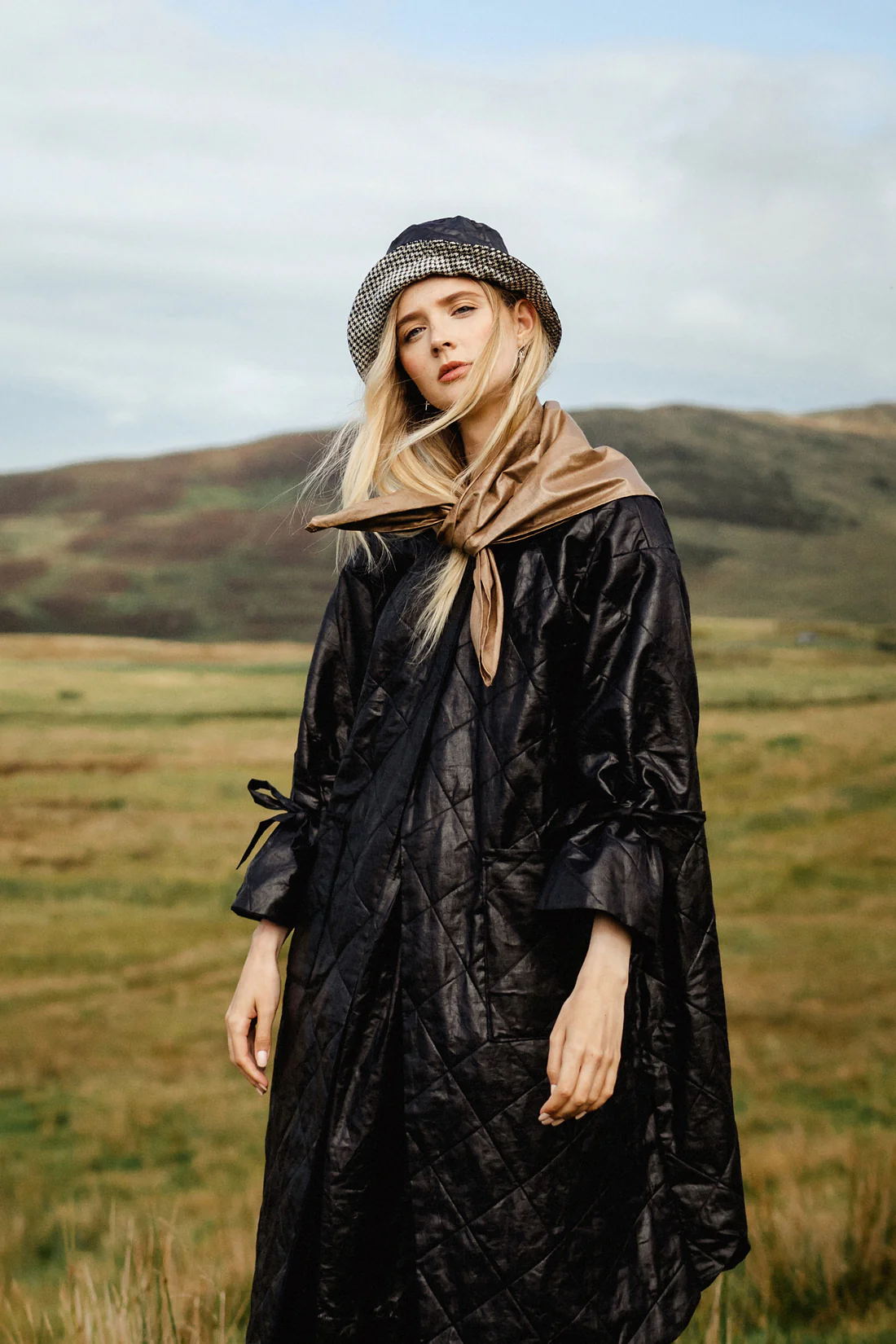 Alongside these guardians of the craft, a revival has occurred among artisans who aim to preserve the heritage behind spinning and weaving. Community workshops and small studios have renewed public interest in the tradition.
Helen Keys and Charlie Mallon, farmers from Co. Tyrone, grow flax much like their Irish forebears did a thousand years before. “We realized early on that the interest wasn’t just about honouring heritage,” explains Mallon. “We got much more interest from people concerned with it being a locally and sustainably produced fabric, and something that could form part of a beneficial food and farming system.”
In fashion, like farming, the focus on sustainability has also sparked a renewed interest. As one of the most eco-friendly fibres in the world, flax cultivation requires little water, minimal pesticides, and is fully biodegradable, making it attractive to environmentally conscious consumers who favor natural materials and ‘slow fashion’. Centuries later, Irish linen remains valued for its longevity and now, too, for its responsible production.
Modern Revival
As interest in heritage materials grows, Irish linen has re-emerged on the global market as an expression of understated luxury. Several contemporary designers and craftspeople now blend ancient motifs like the triskele and Celtic knotwork with modern aesthetics. Natural-fibre interiors and artisan-made textiles have brought linen back into everyday Irish life.
At the same time, fashion houses and bespoke tailors continue to choose Irish linen for its exquisite finish and character. Whether in religious garments, hotel finery, or haute couture, linen appears wherever quality and elegance are valued above glittery trends.
Modern interior designers have also devised uses for linen as a versatile luxury fabric. Studio owners, Angus and Charlotte Buchanan, transformed an Edwardian home with linen in creative ways. “We absolutely love linen,” shares Angus. “In fact, we can’t think of a single project that hasn’t included it in some form. It’s a material that brings both soul and practicality to a space. We use it on upholstery, curtains, cushions, and even walls. It has a softness and tactility that feels instantly inviting, and a natural movement that gives a room life and texture.”
This revival highlights the cultural resonance of linen today, reminding us that it has always been a meeting of land, labour, and spirit. From flax fields to family tables, from Brigid’s cross to the looms of Ulster, it has carried the lasting imprint of ancient lineage to contemporary culture.













Leave a Comment