

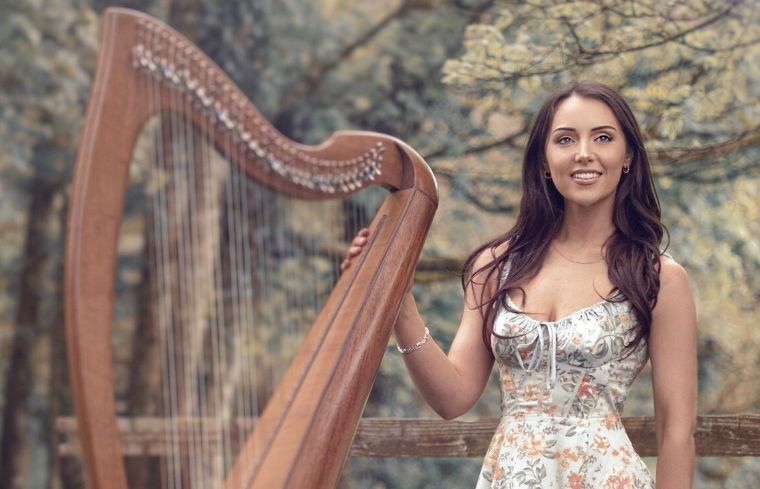
At just 27, Kate Heneghan has already built a career spanning concert halls, classrooms, and broadcast studios around the world. A talented harpist, violinist, and pianist, the Castlebar, Co. Mayo native now brings her formal training, performance experience, and deep-rooted Irish musical tradition to Celtic Woman. Across international stages, her journey reflects technical mastery and a sincere passion for sharing Ireland’s rich musical heritage.
How and why did you first get into music?
Everyone starts off playing the Tim Whistle in primary school in Ireland. Growing up, my mom knew she wanted all of her children to play music; Irish culture is really important to her. She’s a primary school teacher and a Gaeilgeoir. We all did Irish dance and learned how to play music. I was given a Tim Whistle at five, and handed a fiddle at seven, but I don’t think she ever thought my siblings or I would take it to the level that we did. I really connected with it and absolutely loved it. I’m happiest when performing. I can be practicing, and get lost in it, and time just passes without me noticing. For as long as I can remember, playing music has been something I’ve always done, and it’s always been a part of our family life. My three siblings play, my mom plays, my aunties and my uncles all play. It’s innate in us – a family affair.
Are they the same reasons that you continue to do it today?
I suppose what I’m trying to do is tell a story through my music and enjoy the moment. I love performing and sharing Irish music with others. One of my favourite things is to play in an Irish traditional music session, it’s heaven on earth for me. When something is being performed live, in real time, that’s where the magic is in performance, for the listener as well as the performer. It’s fun and relaxed, and there is an inclusivity. When we’re playing in a pub here in Ireland, and someone sitting at the bar has a song, they’re invited to come in and sing. It’s a really inviting space where everyone is getting something out of it. You can join in on the choruses of songs and tap your feet to the music. The most enjoyable parts of my life are being in a session on stage.
The Celtic Woman gig – is this something that was on your musical horizon at any time?
It definitely has come out of the blue. I’ve been playing the fiddle since I was seven and grew up in an era when the internet and YouTube were becoming popular. I have been following Celtic Woman since its inception. As a child and a teenager, I spent my time watching violinist Mairead Nesbitt. I grew up when Irish music was so globalized, and I thought it could be a job I could do too. I followed Mairead Nesbitt and bought all her albums. She was one of my favorite fiddle players. I remember in 2015, I had just gone to college to study Irish music when Tara got the gig. I followed Taryears andy for eight or nine years, and knew it was something I wanted. It’s the pinnacle of fiddle playing in the Celtic music world. It’s an honor to step into the role that both of those women have shaped so beautifully.
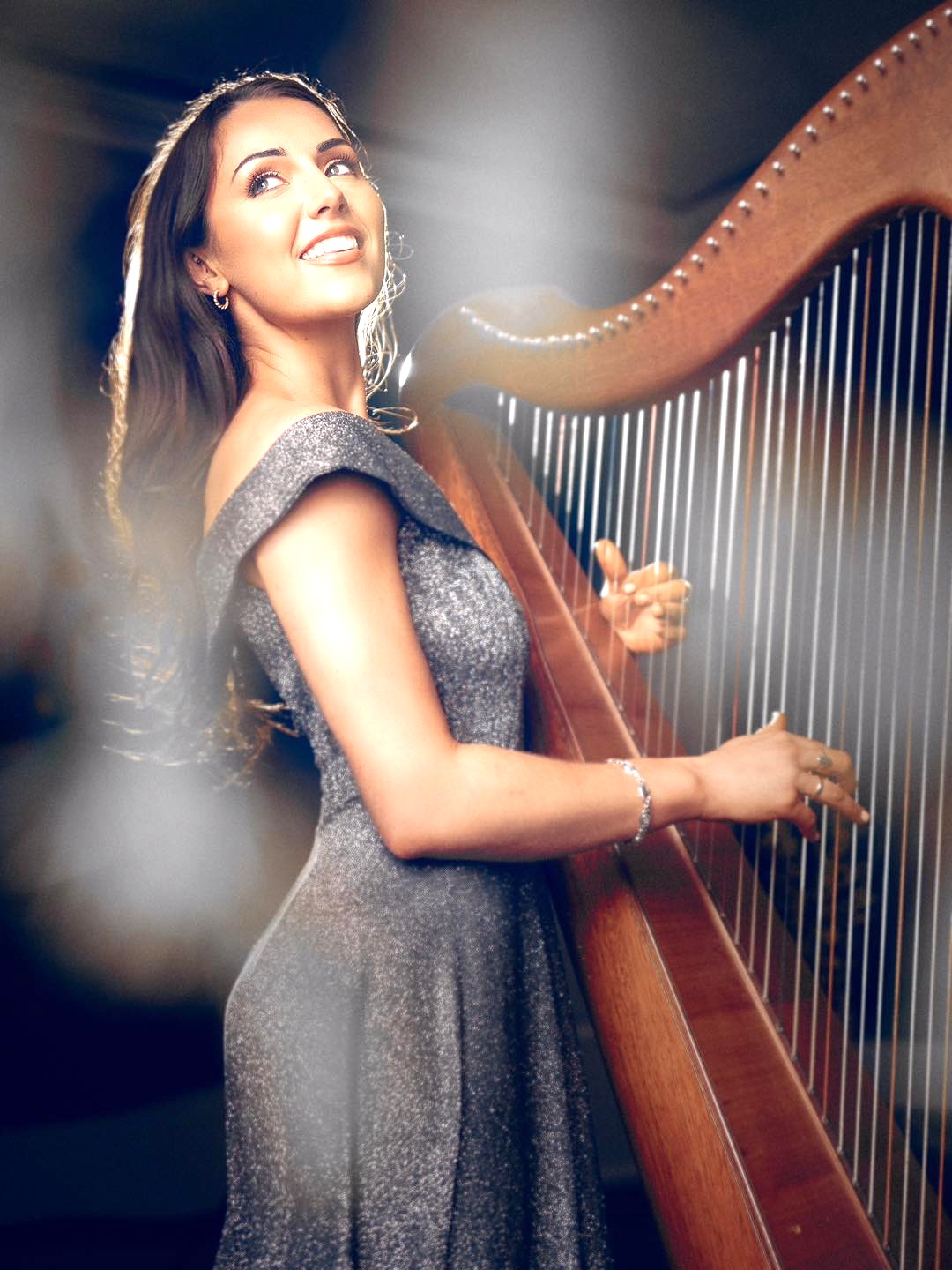 Irish music is in a very different place these days, but always with a nod to its roots.
There was a real folk revival in the 1970s. That’s when the likes of the Chieftains were huge bands, like Tudannon. That was a very niche kind of traditional Irish music with singers like Dolores Kane and Mary Black. Then, with the emergence of Riverdance in the 1990s, it hit an audience like no other. It really became global then. Riverdance paved the way for the likes of me and a new generation of young musicians, singers, artists, and creatives to travel and live as Irish musicians. All of a sudden, that became a possibility. When I decided I wanted to do music as a career at 15 or 16, I was lucky that my parents fully supported me. My mom is also a fiddle player and had wanted to while growing up. It’s a real honor. We’re lucky in Ireland to have such a strong sense of identity and culture, and music and the arts are at the forefront of that. To be able to travel and share our music with people from all around the world is what it means for me to be Irish. I’m lucky I got to grow up dedicating myself to my music and my art for my entire life.
The role of the fiddle has changed as well.
The fiddle is a really versatile instrument. It can play absolutely any genre. I look at the fiddle as a voice and a means of expressing myself as if I’m singing and evoking emotion. Growing up, I was predominantly a fiddle player. I learned by ear and by sitting in on Irish traditional music sessions with older musicians. As I got older and began taking formal classical violin lessons, my approach changed in the way I played, listened, and performed. As a musician, you’re never done learning. It’s always evolving. Depending on the scenario I’m in, whether on stage, in my sitting room with my family, playing at home, or just jamming or competing, the sound and style changes.
Along with the Celtic Woman gig, are you also composing original material?
Yes; I also play the piano and the harp. Piano is my third instrument, between the harp and fiddle. I absolutely love composing – I did my master’s degree in composition. I approach all of my composing from a chordal point of view. I don’t really write any original music. I’ve written a few tunes for the fiddle, but most of my writing is always done on the harp and the piano, because I start with chords. I find it easier to approach writing music on those instruments. I’ve definitely written music in difficult periods in my life as a way of coping with my emotions, but I also often write music when I feel happy, or when I learn a new chord progression. It’s something I’m always tinkering away at. My Voice Memos app on my phone is full of 30-second recordings.
Social media has taken the music industry to different places in recent years.
I grew up on the cusp of the age of social media. I’ve known nothing different. It is so important nowadays to have a social media presence. I don’t get too bogged down with followers or views, but I look at my social media as an online CV. I enjoy making videos myself and sharing music. It’s another platform for creating and sharing music. When I’ve spoken to older, successful musicians, they had to make a CV. That’s not the case anymore. Putting on live shows and concerts is what I enjoy most. There’s direct feedback from listeners and fans.
Do you get to interact through social media with these folks? And if so, what are those exchanges like?
I’ve had some lovely messages and emails from Celtic Woman fans, which I really appreciated. If I put up a video and people have the option to reply and comment, that’s always a really nice form of communication. It’s lovely to know that if you’re putting yourself out there, and putting music online, that someone is enjoying it. I try to respond as much as I can and enjoy that part of the job very much.
www.kateheneghan.ie
@kateheneghan













Leave a Comment