

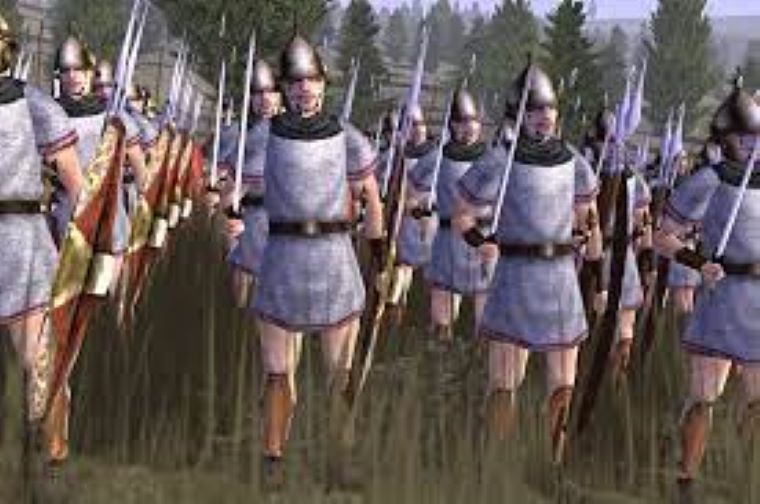
Celts have always been associated with the northern European lands and of inhabiting Ireland, Scotland and Wales; but it is true that Celtic tribes did migrate to Spain, known then as the Iberian Peninsula.
Today, it is believed some Celtic tribes migrated, not invaded, the Iberian Peninsula from about 1000 – 300 BC in two migratory waves: 900 BC and 700 – 600 BC.
The first wave of Celts established themselves in Catalonia, the eastern coastal area of the Iberian Peninsula, and entered by way of the Pyrenees Mountains.
The later groups of Celts traveled west through the Pyrenees to inhabit the northern coast of the Iberian Peninsula and south beyond the Ebro and Duero River basins and as far as the Tagus River valley.
Today, it is not known why they remained north and did not continue south to the Mediterranean coast. Was it because of the strong and ferocious Iberian peoples’ presence? While we don’t know the exact origin of the Iberian people, we do definitely know the Celts reached these areas in what is modern day Spain.
These tribes are known today and called Celtiberians, a name given to them by the Romans who did invade around 45 BC. and encountered them living there.
Celtiberians were a Celtic speaking people of the Iberian Peninsula in the final BC centuries. They spoke a definite Celtiberian language, as attested by the Celtic text, Botorrita Inscription, found on the Iberian Peninsula. The Celtiberian language was Hispano-Celtic (Iberian Celtic) languages that were spoken pre-Roman and during the early Roman period in the Iberian Peninsula.
The Celts participated in the Hallstatt culture, which was the iron age, in what is now north-central Spain.
Historians and archaeologists, years ago, discovered two settlements in Spain that are identified as originally Celtiberian: Cabezo de Acala, and Castro de la Coronilla.
Both are located in what is today the province of Aragon. The Celtic tribes identified as historically living in Spain are: Lusitanians, Cantabrians, Asturians, Carpethans, and Arevaccans.
They were pastoral by nature and lived in small villages rather than large urban areas.
They were into cattle raising on the Iberian plains and hills. They also built hill-forts, called castros, a new permanence with stone walls and protective ditches.
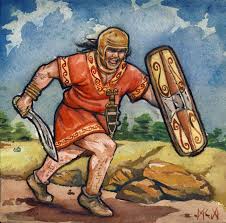
They were protected by an elite Celtic warrior class. The Romans, who found them when they invaded, found the Celt warriors to be independent and courageous in battle and warlike.
In war the Celtiberians favored guerrilla tactics, moving quickly on horeseback, using small round shields for speed, short double-edged swords, bows and arrows and double-bladed axes and javelins
Original Celtic sites of some settlements today in Spain are identified by – briga ending to the name of the town or village. What does remain today of Celtic ruins is in the northwestern peninsula especially in Galicia and Asturias.
Archaeologists Martin Almagro Gorbea and Alvarado Lorrio have discovered and confirm the distinguishing iron tools and extended social structure of the development of Celtiberian culture that evolved from the castro culture.
From archaeological digs and the reconstruction of buildings and villages show the Celts built their villages on hills for strategic defense. The houses were circular in construction built with low stone walls and thatched roofs of straw and broom probably without windows.
The buildings housed family and animals together similar to what the Celts did in Scotland, Ireland, and Wales. Outside of the modern city, Santiago de Compostella, the hamlet of O Cebreiro, is a restored village of circular dwellings, called pallozas, that bring back the distant Celtic time.
Also found were Celtiberian tombs discovered here along with metal works, horse trappings and prestige weapons.
Celtic lore of magic, mystery, and with a strong bond to nature practiced in the northern European areas were also practiced by those Celts in Spain. They revered the sun and moon and attached great significance to forests, rivers, wells, and mountains.
They venerated the oak tree and their worship was carried out in natural sites or clearings rather than temples. They practiced similar rituals to those in British Isles and Brittany.
And Celtic legends, myths and tales of their kings and queens were told to establish that the Iberian/Celtic King Melesius was the father of the Irish race.
Little remains today of the Celtic artistic side other than some simple clay pottery. While in the Iberian Peninsula, the Celts did practice metalwork and ironwork and this has been found by archaeologists.
Galicia
Spain is best known for the dry, hot, dusty plains of La Mancha where Don Quixote ’tilted at windmills.’ But in the northwestern corner of Spain is a beautiful, lush, verdant, countryside that resembles Ireland and Scotland so much.
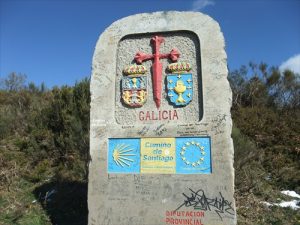 It is here on the plush green hills of Galicia that remains today the strains of Celtic tradition and culture in Spain. The ancient connections between northern Britain and Celtic Spain are strong.
Dolmens, standing stones, and the trail of ‘cup and ring’ designs carved on stones are the earliest evidence of the movement of Celts to Spain and can be found in Galicia.
Galicia means “Land of the Gaelic People,” and it is here that there are Celtic origins in culture and tradition.
Most of the inhabitants today of the Galicia region of Spain are fair skinned with light blue or green eyes. This is due to the intermarriage of Celts with the Iberian people. One only has to walk around Santiago de Compostella, the capital of the region, to see the difference in skin complexion.
They also speak Galician, their own language which is a combination of Spanish and Gaelic/Scottish languages. While Spanish is the official language throughout Spain and is so in Galicia, the natives speak their own Galician language among themselves still to this day. Signs throughout the cities are both in Spanish and Galician.
Also, while walking the streets of Santiago de Compostella, one can hear the distant melodic notes of bagpipes. Suddenly, the sound is closer and in walk bagpipers playing away and wearing their Scottish kilts.
Many of the festivals and games played in this region of Spain are of Celtic and Scottish origin
But, if Galicia means “Land of the Gaelic People,” how did Ireland, Scotland and Wales become the main area of inhabitants of the Celts? How did Ireland become the country of the Gaelic people?
Fast forward to the year 2006, and an Oxford University team of researchers, directed by Bryan Sykes, professor of human genetics found changes in scientific understanding of what is Britishness.
This team discovered that the Celts, Britain’s indigenous people, are descended from a tribe of Iberian fishermen who sailed across the Bay of Biscay six thousand years ago and landed in what is today the British Isles.
Sykes and his team did a DNA analysis and found almost identical genetic fingerprint to the inhabitants of coastal regions of Spain and that these inhabitants who migrated north of Spain between 4,000 and 5,000 BC.
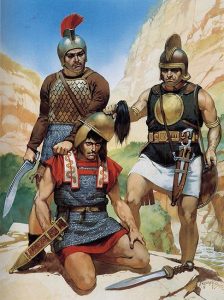 Therefore, according to Sykes, the majority of people in the British Isles are actually descended from the Spanish.
Sykes spent five years taking DNA samples from 10,000 volunteers in Britain and Ireland and he then produced a map of genetic roots.
In researching the Y chromosome, inherited from the father, Sykes found all but a tiny percentage of the 10,000 volunteers were originally descended from one of six clans who arrived in the UK in several waves of migration prior to the Norman conquest.
Oisin, is the name of the Celtic clan that held the most common genetic fingerprint and it is this clan that Britains are the descendants of the Iberian fishermen who migrated to Britain between 4,000 and 5,000 BC. They are now considered the UK’s indigenous inhabitants.
He published his research and findings in his book, Blood of the Isles (2006).
Wow! Which came first, the chicken or the egg? the Celts or the Iberians? According to Sykes, the Iberians came to Ireland, Scotland and Wales, and became known as the Celts and are written up in the historic Irish Book of Kells.
Then, centuries later, the Celts migrated to Spain and intermarried with the Iberian/Spanish peoples. A complete circle in migration. It, therefore, begs the question, are we, as a world humanity, all related in some way or manner? Only the genetic fingerprint knows for sure.













Very Interesting…
I’ve just discovered, from a DNA Test, that I’m 58% “Welsh/Scottish/Irish” 25% “English” -and 17% “Iberian”. That last part came as a complete surprise.
My father was English: my mother Welsh. No KNOWN “Iberian” links…
Any thoughts??
Maybe was a survivor of the “la Armada” shrunk in the western coast of Ireland in the XVI century. Philip, you are as Iberic as the BEST ham of the world 😉
I too was surprised to see Iberian DNA. I never even heard of Iberian people before
I too had my DNA tested. It came out that I am 35% Scot, 25% Irish, 25% Norwegian and 15% Iberian. The Iberian surprised me. Me being who I am now claim Iberia and refer to myself as Iberian. That I am fair skinned and auburn haired is never questioned. I believe most people know nothing about Iberia.
Thank you for the wonderful lesson of the past, it really helps me see a more beautiful picture of the European culture. My daughter did ancestry.com and it hit back 37% Spanish, 25% Portuguese, 6% Basque, then 15% native Puerto Rican and the remainder was north African- basically, this all sparked an interest in me in regards to the question of who I am? Because of her test results, my father told me that his side of the family is Portuguese and my grandmother (mother’s side) has one last name (of four different ones) as De Silva, which I read somewhere is a very typical Portuguese name. I love learning about Europe history (from Portugal to Russia, North to South, can never get enough of the Roman’s and ancient Greeks) and the Celts are certainly fascinating, may their memory live on through their descendants and same for Iberia. Thank you again, for this priceless piece of history. Again, my daughter’s ancestry test has set me on a course where I’ve become more fond of learning about the Mediterranean and even hope to one day visit Europe, maybe starting with Spain or Portugal. Also, on Google images there’s wonderful sculptures and statues that the Celts/Iberians created- really marvelous stuff, and many other beautiful artifacts. I feel like in these difficult times where Europe seems to be enduring many of the same Issues the US (I’m American, and proud, BTW) is dealing with- Mass Illegal immigration, inflation, crime- I just feel like with all these hard times we’re going through, we should remember that we too are part of something special indeed. Cool history reading here. Props. Peace and love to all on this jinxed blue marble.