

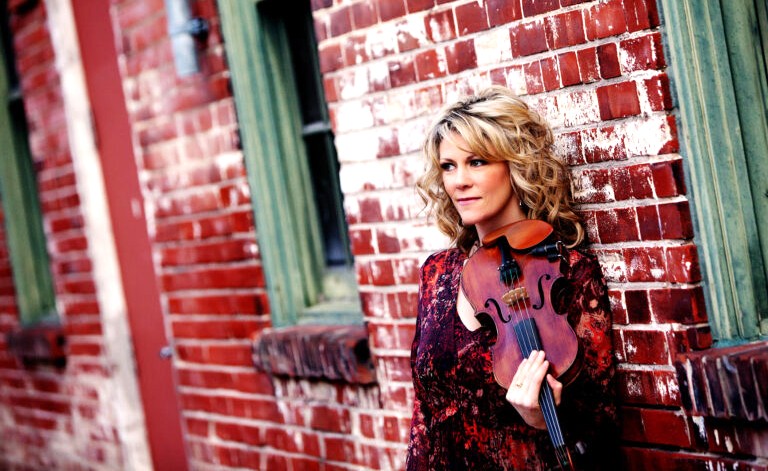
Before the tours, the tunes, the toddlers – and prior to the many years writing, recording, rehearsing and performing music – a young Natalie MacMaster was just a kid in Cape Breton growing up in a world of family, music, and community. In her new memoir, I Have a Love Story, MacMaster looks back on those early influences of home, the start of her music career, and her marriage to fellow fiddler Donnell Leahy.
The couple, who now tour together with their seven children, differ on the details of their first date decades ago. “Recalling the specifics for the book was sometimes challenging,” MacMaster admits in conversation with Celtic Life International. “I was trying to remember what I was wearing when we met. I thought I wore a white blouse, but he says I had on a black jacket. Sometimes when we look back, we see things in a storybook kind of way.”
While MacMaster’s story does indeed read like a fairytale, it is nonetheless rooted in reality. “The book is only partially about my journey as a musician. It has a deeper meaning: receiving love in life.”
And there was certainly no shortage of that. MacMaster, a Juno and Gemini award winner with multiple Canadian Country Music and East Coast Music honours, tells a story that is much more than mere romance. Love and music took root in the home where she was raised, grew through the support of family and community, and eventually blossomed into the family she built with Leahy. Her reflections also extend beyond her own good fortune. “Several years ago, I became overwhelmed, especially as a mother of seven, thinking, ‘What kind of world will my kids have to live in?’ with all this harshness in the world.”
That reflection gave way to gratitude rather than fear, and her desire to express something simple in these complex times. “There are so many messages being thrown at us every day, and maybe the most important one is quiet and beautiful. I had a moment about seven years ago when I realized, ‘Oh my gosh, I have a love story.’”
MacMaster’s optimism was cultivated in a childhood filled with kinship, community, and kindness.
“It was my parents who shaped my identity in the beginning to love -thy-neighbor-as-thyself kind of thing. They were just good people.”
Beyond the modesty and proper morals, her environment was filled with music – lots of it, creating the very fabric of the young fiddler’s family and community life. “I was given a great home environment and great support through my musical years. There were so many local concerts I was asked to play in.”
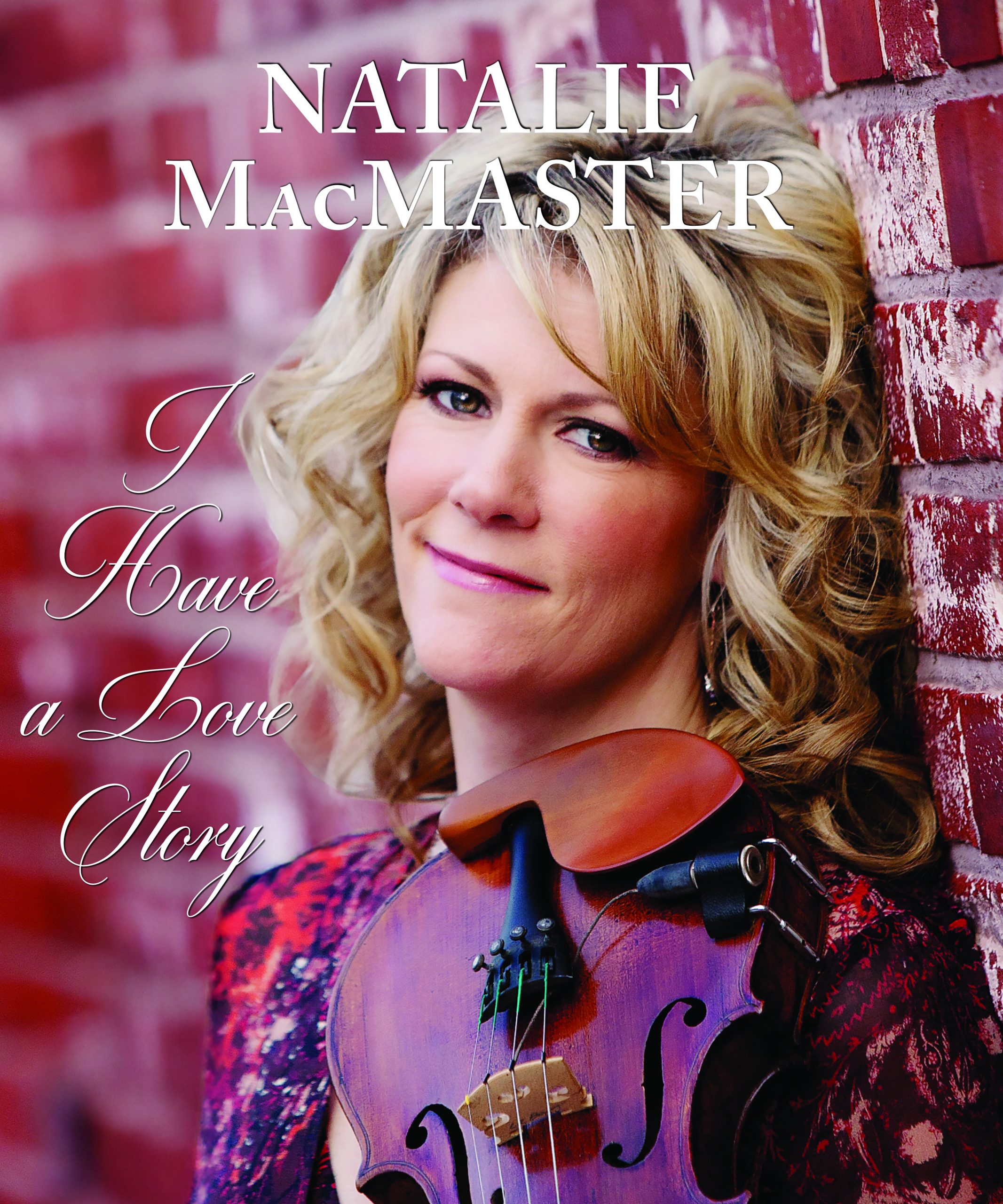
Yet long before she even stepped onto a stage, that sense of sharing music – so central to Cape Breton customs – laid the foundation for her touring years. Raised in a world of kitchen parties and foot stomping gatherings, MacMaster quickly absorbed the repertoire and style surrounding her before getting her first fiddle at the age of nine.
A defining influence in her life was, of course, her uncle Buddy Macmaster – the consummate Canadian and international fiddler. “As a musician, I listened to him more than any other, especially his live performances. I tried to mimic his playing and the inflections that he put into the music.”
Just as important was the example he set as a person. “He lived his life just giving and giving…my goodness, he gave so much. He would sometimes play the fiddle for ten hours a day while traveling. He might do three gigs in a day just because he didn’t want to say no to people. He was a good soul, in a genuine way.”
With strong musical influences and values from the start, MacMaster released her first album, 4 on the Floor, as a teenager.
“Well, I thought it was kind of out of the norm, maybe, but I decided to do it. Here I was at sixteen making my first record, and my Uncle Buddy, arguably the most famous fiddler in Cape Breton, didn’t make his first recording until he was sixty.”
From that point on, there was no stopping her, and she sound found herself well beyond the kitchen gatherings and community halls of Cape Breton. Over the years, she became one of the most recognizable musicians of the region’s distinctive fiddling tradition, bringing its characteristic sound to audiences across Canada and around the world.
Yet even when the stages got bigger and the tours longer, the traditions that formed the foundation of her career remained firmly in place and, according to MacMaster, continue today.
“I will say that house parties were more frequent when I was a child but, generally speaking, it’s the same. The square dances are still happening, and there’s one on Monday nights in the summer in Brook Village that’s wildly popular with young people. It’s really great to see that things are carrying on even fifty years later.”
That same spirit of continuity would eventually shape the next chapter of MacMaster’s life as well, particularly in her relationship with fellow fiddler Donnell Leahy and the musical family they would build together. Like many great partnerships, their collaboration flourished from shared instincts.
“We have the same taste in music,” MacMaster explains. “When we’re working out arrangements, Donnell’s got a great way of hearing things. He’s got a good sensibility, and I have my own as well. Sometimes it’s different from his, but when we talk it through and try it out, we generally come to the same consensus.”
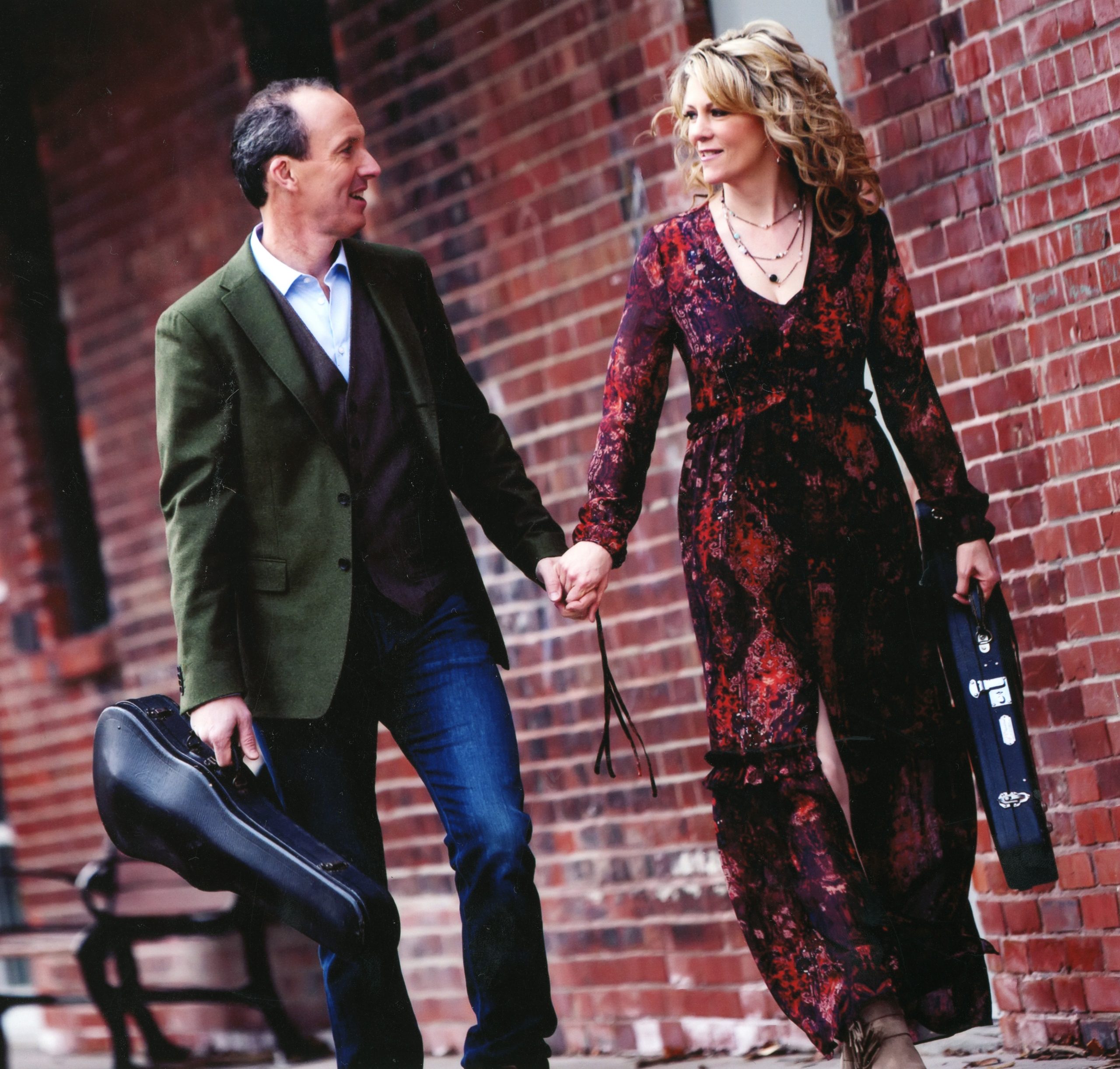
Even when they disagree, whether about the details of their first meeting or the arrangement of a song, they are ultimately speaking the same musical language.
“Sometimes we have to hash it out a bit, but generally speaking, I like his musical taste, and he likes mine.”
Their audiences reap the benefits of that creative synergy. “Over the years, we’ve learned how to craft a show that includes the beautiful tradition of slow airs, ballads, and music that tugs at the heartstrings.”
Balancing family life with a demanding touring schedule has not always been easy. MacMaster recalls a particularly exhausting period when she and Leahy were raising five children under the age of seven while continuing to perform. “I remember being really, really exhausted. But when I look back, I think, wow, we did it.” Life on the road meant homeschooling between performances, teaching stepdance lessons in hotel rooms, and sometimes nursing an infant before heading onstage. “There were a lot of things to take on, but we navigated through it all.”
Throughout those years, the faith and gratitude that run through the pages of her book are clearly central to how she approached both music and family in real life. “I believe in God, and I practice my faith to support that belief,” shares MacMaster. “That’s the lens through which I look at life.” For her, gratitude is a way of staying grounded amid the pressures of touring and parenting. “If everything crumbled away tomorrow, I’ve got a great family, and I’ve come from a great family, and we always have music.”
Today, MacMaster continues to share that spirit with audiences around the world.
“We’ve managed to sculpt a sound that I think is very broad and appeals to people beyond just those who want to hear fiddle music.”
She and her musical family have planned a summer tour followed by performances overseas, including Scotland, and the hugely popular Christmas shows that have become a holiday tradition across Canada.
Whatever the setting, her hope for audiences remains simple. “I do believe music is soothing and healing. If someone comes out to one of our shows, I hope they feel a lightness in life and something that resets the soul.”
www.natalieanddonnell.com
@nataliemacmasterofficial













No Place on Earth like Cape Breton… I took my wife to be, there during our first honeymoon,..and I love fiddlers…..they’re the greatest!